AI Development Built Around Your Problem, Not a Template
From a single intelligent feature to a full AI-first product, we build custom AI around your specific problem and your real data. This is the home of our AI development work, the applications, SaaS products and enterprise systems, and the gateway to our generative AI, agents and automation services.
Start Your AI Project- Senior engineer replies within 24 hours
- NDA on request
- No obligation
Describe your project
Share a few details and our team will reach out to you within 24 hours.
What AI Development Actually Means
Engineering discipline over hype — that is the thread through every kind of AI development we do.
AI development is a broad term, so it is worth being precise about what we mean by it. At its core, it is building custom AI around your specific problem rather than handing you a generic tool and asking you to bend your business to fit. Sometimes that means a standalone application where AI does the central work. Sometimes it means adding intelligence to a product you already run. Sometimes it means building a whole AI-first SaaS product designed to scale and sell.
This page covers AI development in two senses. First, the foundational development services, custom applications, AI-powered SaaS, feature integration, MVPs and enterprise AI, which you will find detailed in full below. Second, it acts as the hub for our more specialised AI development work: generative AI that creates, AI agents that act, and AI automation that takes repetitive work off your team. Those three each have their own page, summarised here with a link to the detail.
What unites all of it is engineering discipline. The model is rarely the hard part anymore, what separates AI that ships from AI that gets shelved is grounding it in your data, handling the edge cases, controlling the cost, and integrating it into the systems you already run. That is the thread through every kind of AI development we do, whether it is a custom application or an automation that quietly saves your team hours each week.
Foundational AI Development Services
From custom AI applications to intelligent automation and predictive systems, we help businesses build practical AI solutions that deliver measurable outcomes. Every solution is designed around your data, workflows, and long-term business objectives.
Custom AI Applications
A custom AI application is a purpose-built product where AI does the core work, designed entirely around your use case. No template, no compromise to fit someone else's idea of what the product should be. We study your problem, your users and your data, then build the application that solves it directly, with the AI engineered to be reliable on your real cases rather than impressive on a handful of demos.
This is the right path when your problem is specific enough that off-the-shelf tools do not fit, or when the AI capability is central enough that it deserves to be the product rather than a feature bolted onto something else. We have built custom AI applications across industries, and the common thread is that each was shaped around one organisation's exact problem rather than a generic market.
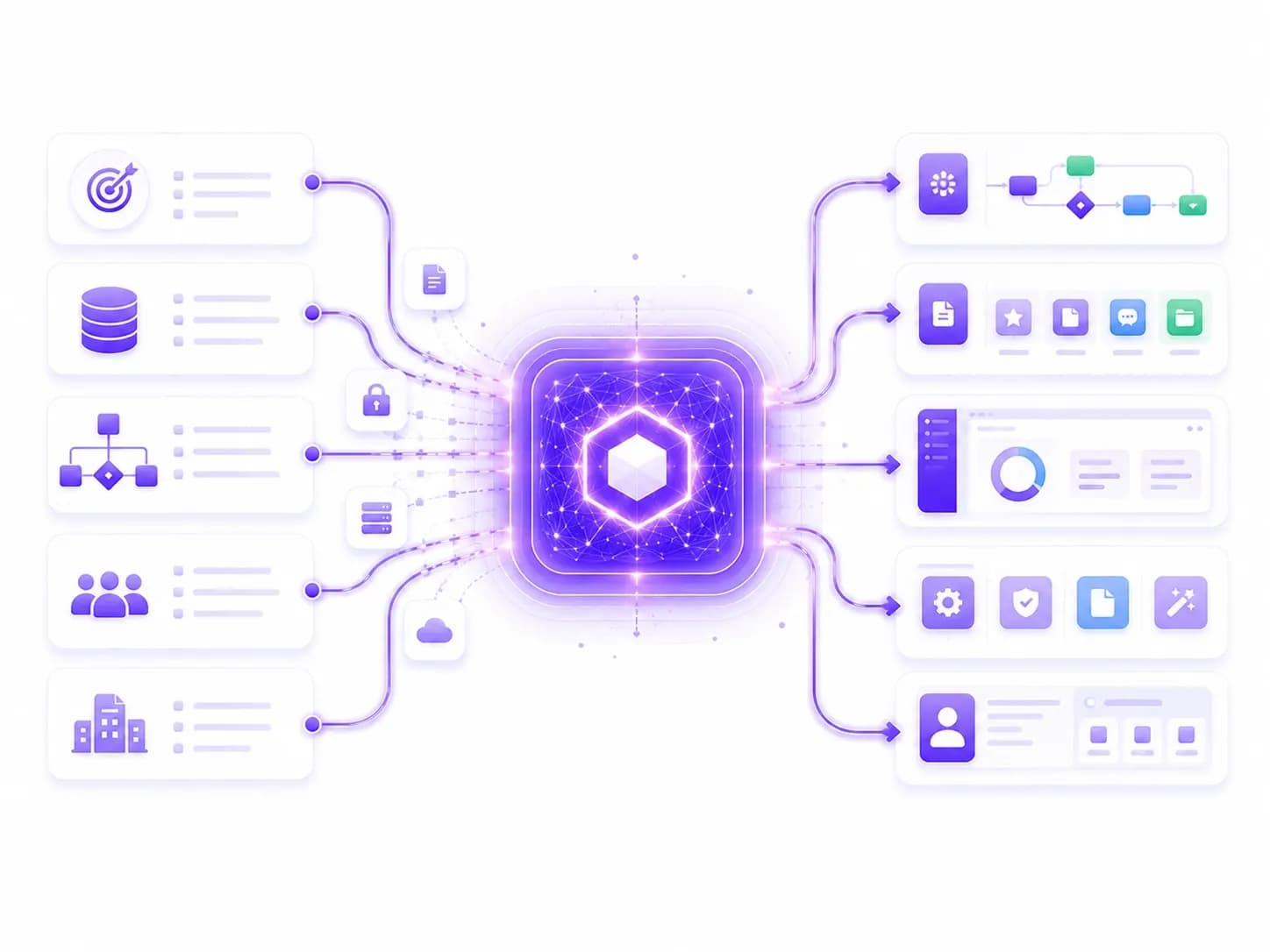
- Purpose-built around your exact problem and data
- AI engineered for reliability on your real cases
- No template or compromise to fit a generic product
- Right when off-the-shelf tools genuinely do not fit
AI-Powered SaaS Products
If you are building a SaaS product with AI at its heart, we build it to scale and to sell, not just to demo. That means multi-tenant architecture so it serves many customers cleanly, usage tracking so you know who is using what, and cost controls that protect your margins as usage grows, the part that quietly sinks many AI SaaS products when the model bill outpaces the revenue.
Building an AI SaaS is as much about the business model as the technology. AI features have a running cost per use, so the economics have to work at scale, not just in a pitch deck. We build with both sides in mind: AI features reliable enough to charge for, and an architecture whose costs scale sensibly as you grow. The goal is a product you can actually run a business on, not a clever demo that becomes unaffordable the moment it succeeds.
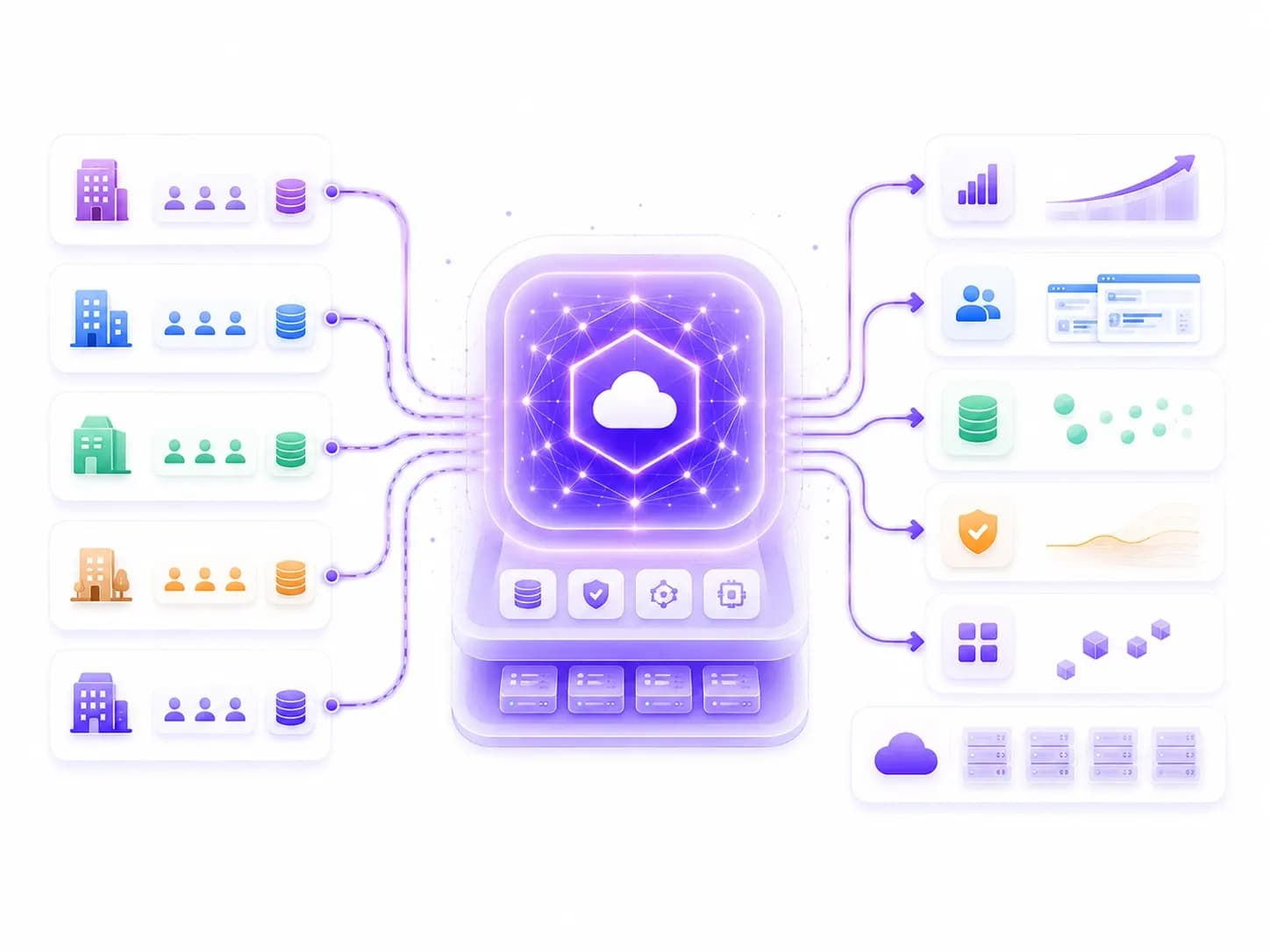
- Multi-tenant architecture built to serve many customers
- Usage tracking and cost controls to protect your margins
- AI features reliable enough to charge real money for
- Economics that scale sensibly as usage grows
AI Feature Integration
You already have a product that works, and you want to make it smarter, smart search, a recommendation feature, an in-product assistant, an intelligent capability that makes the product more valuable. AI feature integration adds that intelligence to your existing product cleanly, so it feels like a natural part of what you already have rather than a bolted-on experiment that sits awkwardly to one side.
The challenge with feature integration is making the new capability feel native. We design the feature around how your product already works and how your users already behave, ground it in your existing data so it is genuinely useful, and build it to the same quality standard as the rest of your product. Done well, users should feel the product simply got smarter, not that a separate AI tool was stapled on.
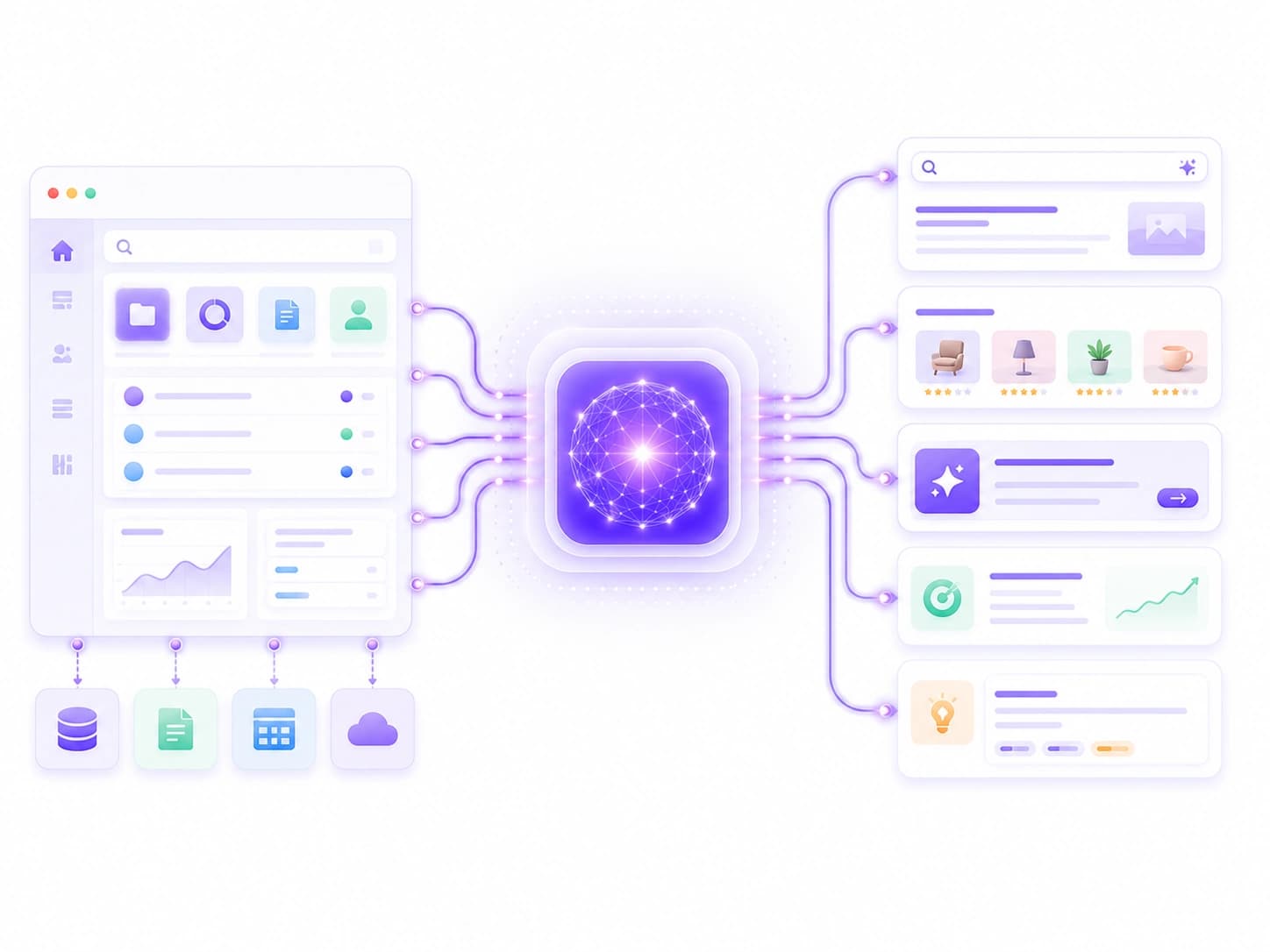
- Adds intelligent features to your existing product
- Designed to feel native, not bolted on
- Grounded in your existing data to be genuinely useful
- Built to the same quality standard as the rest of the product
AI MVP Development
You have an AI idea, but you are not yet certain it will work technically or that customers will pay for it. Committing to a full build before knowing either is how budgets get burned. An AI MVP, a minimum viable product, lets you find out quickly and cheaply. We build a focused first version that proves the core idea on real data, so you can put it in front of real users and learn whether it works before committing to the full thing.
This is often the smartest first step, and we frequently recommend it over a big upfront build. An MVP de-risks the idea: it tests the hardest technical assumption, gauges whether users actually value the capability, and gives you something concrete to refine rather than a spec on paper. If it works, you build on a proven foundation. If it does not, you have learned that for a fraction of the cost of finding out the hard way.
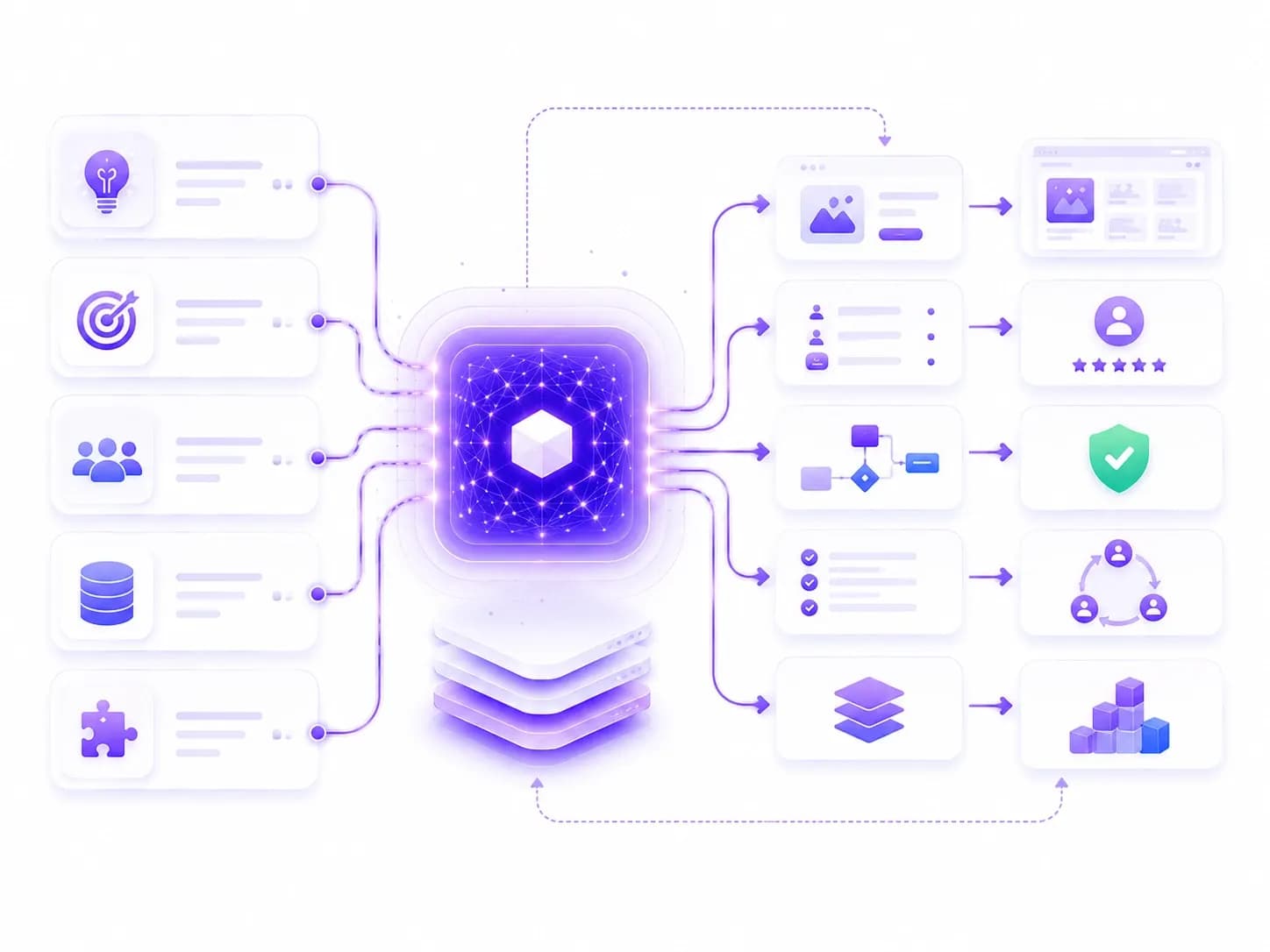
- A focused first version that proves the core idea
- Tested on real data with real users
- De-risks the idea before a full commitment
- Often the smartest, cheapest first step
Enterprise AI Solutions
Larger organisations have requirements that smaller ones do not: stricter security, compliance obligations, integration with established legacy systems, governance over how AI is used, and the need to scale reliably to many users. Enterprise AI development means building to those standards from the start, with the security architecture, audit trails, access controls and governance that larger businesses and their regulators expect.
We have built AI for regulated sectors, including fintech and healthcare, where the bar for security and compliance is high and the cost of getting it wrong is serious. That experience shapes how we approach enterprise work: compliance and security are designed into the architecture rather than retrofitted, integration with existing systems is planned carefully, and governance over how the AI behaves and what data it touches is built in. The result is AI that satisfies an enterprise's technical, legal and risk requirements, not just its functional ones.
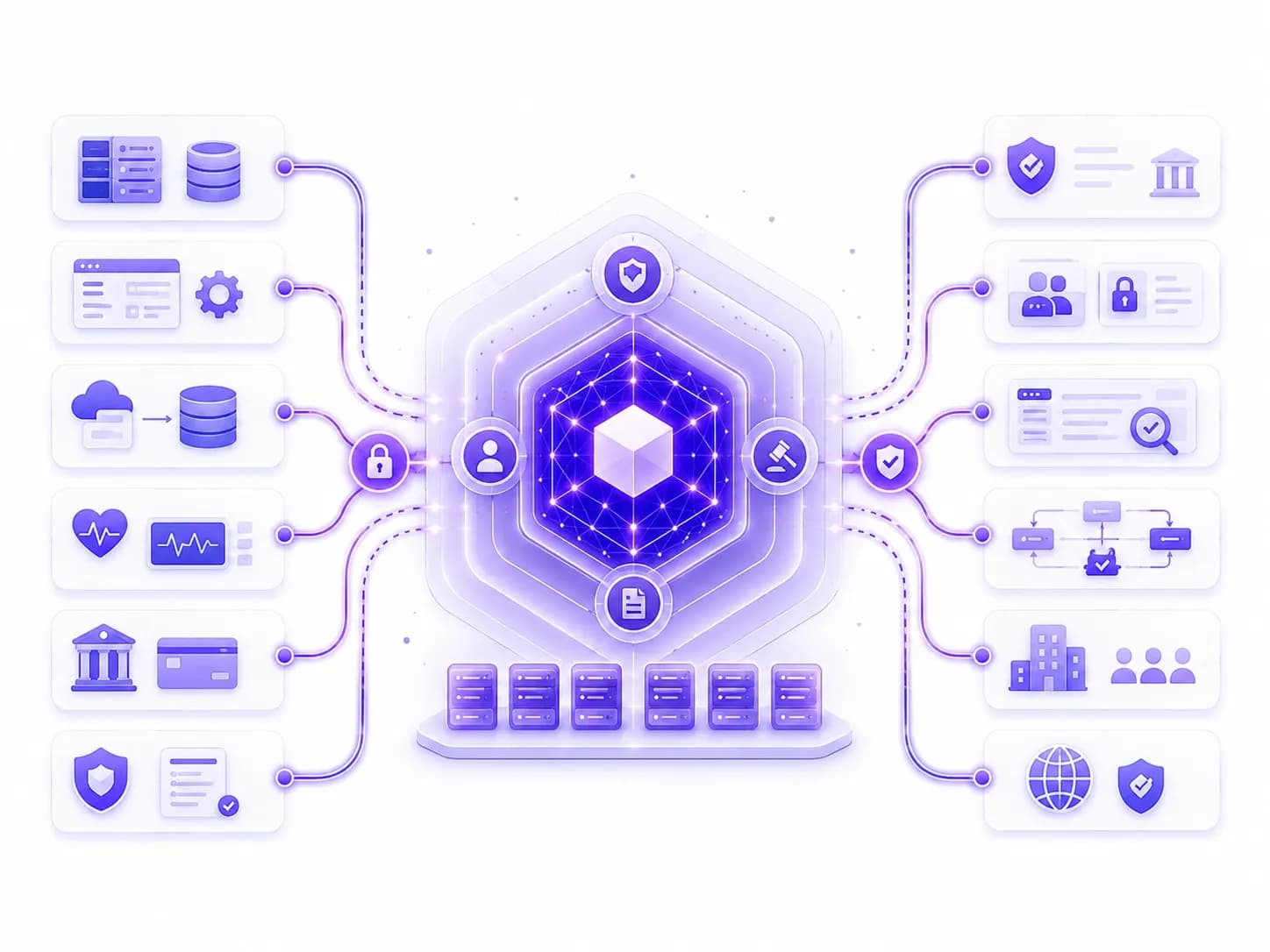
- Built to enterprise security and compliance standards
- Audit trails, access controls and governance built in
- Careful integration with established legacy systems
- Proven in regulated sectors like fintech and healthcare
Specialised AI Development Services
Beyond the foundational development above, we offer three specialised areas of AI development, each with its own dedicated page. Here is a short overview of each, follow the links for the full detail.
Generative AI
AI that creates: text, documents, images and voice. From ChatGPT integrations and in-product assistants to content, document, image and voice generation, all grounded in your real data so it creates from facts rather than imagination. The headline category, engineered to be reliable rather than just impressive.
Explore Generative AIAI Agents
AI that acts, not just answers. Given a goal, an agent works through the steps to achieve it, looking things up, calling your systems, making decisions, and escalating when it should. We build agents for support, sales, internal knowledge and workflow, plus multi-agent systems, all with clear guardrails.
Explore AI AgentsAI Automation
AI that takes repetitive work off your team's plate, sorting email, qualifying leads, updating the CRM, handling routine tickets, and escalates to a human only when one is needed. The least glamorous AI and frequently the most profitable, because its return is the easiest to measure.
Explore AI AutomationWhy Businesses Trust Us With Their AI
Successful AI projects are built on strong engineering, transparent collaboration, and responsible implementation. From strategy and architecture to deployment and ongoing optimization, we help businesses create AI solutions that are reliable, compliant, and ready for real-world use.
One team owns the whole stack
The AI, the backend it runs on and the interface your users see are built by the same team. Most AI failures happen at the boundaries between these pieces, and when one team owns all of them, those boundaries are designed rather than improvised. There is no AI vendor pointing at the backend team and no backend team pointing back.
Production-grade, not demo-grade
Anyone can build an AI demo. We build AI that survives contact with real users and real data, with the grounding, guardrails, monitoring and cost control that production demands. Accuracy is measured, not assumed, and we build in the ability to watch how the system performs over time rather than launching and hoping.
Honest scoping
We would rather talk you out of an AI project that will not work than take your money and watch it fail. Sometimes the honest answer is that a simpler tool solves your problem better. That candour occasionally costs us a sale, and it is exactly why the clients we do take on tend to come back with their next project.
GDPR and AVG compliant by default
AI and personal data are a sensitive combination, especially in the EU. Our European base in Amstelveen means we build to GDPR and AVG from the start, keep data in EU regions where required, and are careful about what data flows to which model. Compliance shapes the architecture rather than being patched on at the end.
Which Development Path Fits You
Not every AI solution solves the same problem. We help businesses choose the right approach based on their goals, data, workflows, and growth plans.
And if your need is really about creating content, taking autonomous action, or removing repetitive work, the specialised pages above, generative AI, agents and automation, are the better starting point. We sort all of this out with you in discovery, so you never have to guess which door to walk through first.
If you have a brand-new idea
Start with an AI MVP. It proves the core idea on real data quickly and cheaply, so you commit to a full build on evidence rather than hope. Almost every new AI product is better off being de-risked this way first, however confident you feel about the concept.
If you already have a product
AI feature integration is usually the path: add intelligence to what already works, so users feel the product got smarter rather than meeting a separate tool. This is often the highest-value, lowest-risk way for an established product to adopt AI.
If AI is the whole product
A custom AI application, or an AI-powered SaaS if you intend to sell it to many customers, is the right foundation. Here the AI is central, so it deserves to be the product and to be engineered for reliability and, for SaaS, for economics that scale.
If you are a larger or regulated organisation
Enterprise AI brings the security, compliance and governance that your requirements demand, built in from the start rather than retrofitted. Whatever the functional goal, the enterprise standards wrap around it.
How We Build Your AI
Our process is designed to reduce risk, validate ideas early, and deliver AI solutions that create measurable business value. From discovery to long-term support, every stage focuses on reliability, scalability, and real-world results.
Discovery
We analyse your goals, data, workflows, and business challenges to identify where AI can create measurable value and deliver the strongest return on investment.
Prototype
We create a working prototype using real data, helping you validate ideas, test assumptions, and evaluate potential outcomes before full development begins.
Build
Our team develops the complete solution, including models, integrations, infrastructure, security, and user experience, with scalability and reliability built in.
Support
After launch, we monitor performance, optimize accuracy, manage updates, and provide ongoing support to keep your AI solution effective over time.
Frequently Asked Questions
Every AI project is different, and understanding the right path forward is an important part of the process. We've answered some of the most common questions about AI development, implementation, costs, integrations, and project planning to help you make informed decisions.
A custom AI application is a standalone product built around your problem, where AI does the core work. AI feature integration adds intelligence to a product you already have, smart search, recommendations, an assistant. The first builds something new; the second makes something existing smarter. Which you need depends on whether AI is the product or an enhancement to it, and we help you decide during discovery.
If there is any uncertainty about whether the idea will work technically or whether customers will value it, we usually recommend starting with an MVP. It proves the core idea on real data for a fraction of the cost of a full build, so you commit to the full product on evidence rather than hope. If the idea is already well-proven, going straight to the full build can make sense. We advise honestly based on your situation.
It varies widely with scope, from around EUR 25,000 for a focused MVP to EUR 150,000 or more for a full production system with deep integration. The biggest cost drivers are how much custom model work is needed, how deeply it integrates with your existing systems, and the production requirements around accuracy, scale and compliance. We provide a fixed proposal with scope and price before any work begins.
Generative AI creates content, text, documents, images, voice. Agents act, pursuing a goal through variable, multi-step action. Automation handles repetitive, predictable work at scale. They overlap and often combine: an automation might use generative AI to draft a reply, while an agent might pursue a goal that involves several automated steps. Each has its own page with full detail, and we choose the right mix for your problem.
Yes, and that describes many of our clients. You do not need to understand the technology; you need to understand your business problem, which you already do. We handle translating that into a working AI solution, explain the choices in plain language, and guide you from a rough idea to a shipped product. The discovery stage exists precisely to bridge that gap.
Yes. Most AI projects involve connecting to systems and data you already run, and we design for that from the start. We map your existing tools and data sources during discovery, then build the AI to integrate cleanly rather than forcing you to replace what works. Connecting AI to your real data is what makes it genuinely useful rather than a generic toy.
The core engineering is similar, but enterprise AI carries extra requirements: stricter security, compliance obligations, integration with legacy systems, governance and audit trails, and the need to scale to many users reliably. We build those in from the start for enterprise clients, drawing on experience in regulated sectors like fintech and healthcare. Smaller businesses get the same quality engineering without the enterprise overhead they do not need.
A focused AI MVP can be in your hands within four to eight weeks. A full production AI system typically takes three to six months, depending on complexity and integration. We work in short cycles and show you working output early, so you are never waiting months to see whether the approach is right rather than seeing progress along the way.