AI Agents That Get Work Done, Not Just Answer Questions
A chatbot answers. An agent acts. Give an AI agent a goal and it works through the steps to reach it, looking things up, calling your systems, making decisions, and escalating when it should. We build agents for support, sales, internal knowledge and workflow automation, with the guardrails that make an autonomous system safe to trust.
Start Your Project- Senior engineer replies within 24 hours
- NDA on request
- No obligation
Describe your project
Share a few details and our team will reach out to you within 24 hours.
From Answering to Acting
Engineering discipline over hype — that is the thread through every kind of AI development we do.
For many years, business AI has focused on answering questions and generating responses. AI agents take the next step, and they sit within our wider AI development services. Instead of simply providing information, they can perform tasks, follow workflows, and interact with systems to help complete work automatically.
An AI agent works toward a defined goal rather than producing a single response. It can gather information, use tools and APIs, make decisions within set boundaries, and take action based on changing conditions. This makes it useful for processes that involve multiple steps and ongoing execution.
Because agents can act independently, strong governance is essential. Clear rules, human oversight, and escalation paths help ensure decisions remain accurate, secure, and aligned with business objectives.
The most successful AI agent projects start with a focused use case and a clearly defined outcome. Rather than replacing human judgment, agents are most effective when they automate repetitive work, improve efficiency, and allow teams to focus on higher-value tasks.
Our AI Agent Services
Our AI agent services help businesses automate repetitive tasks, improve customer experiences, and streamline operations. Unlike traditional chatbots that simply provide answers, AI agents can access business systems, retrieve information, perform actions, and escalate complex situations when human expertise is required. From customer support and lead qualification to workflow automation, our AI agents are designed to help your business operate more efficiently and scale with confidence.
Customer Support Agents
A support agent does not just answer a customer's question, it resolves the issue. Where a chatbot might explain how to change an order, a support agent can actually look up the order, make the change, confirm it, and tell the customer it is done. It takes the steps a human support rep would take, on your real systems, within clear limits on what it is allowed to do autonomously.
We build support agents grounded in your knowledge and connected to your real systems, your order system, your account management, your ticketing, so they can act rather than just advise. For the routine issues that make up the bulk of most support volume, the agent resolves them end to end. For anything sensitive, unusual, or beyond its boundaries, it escalates to a human with the full context attached.
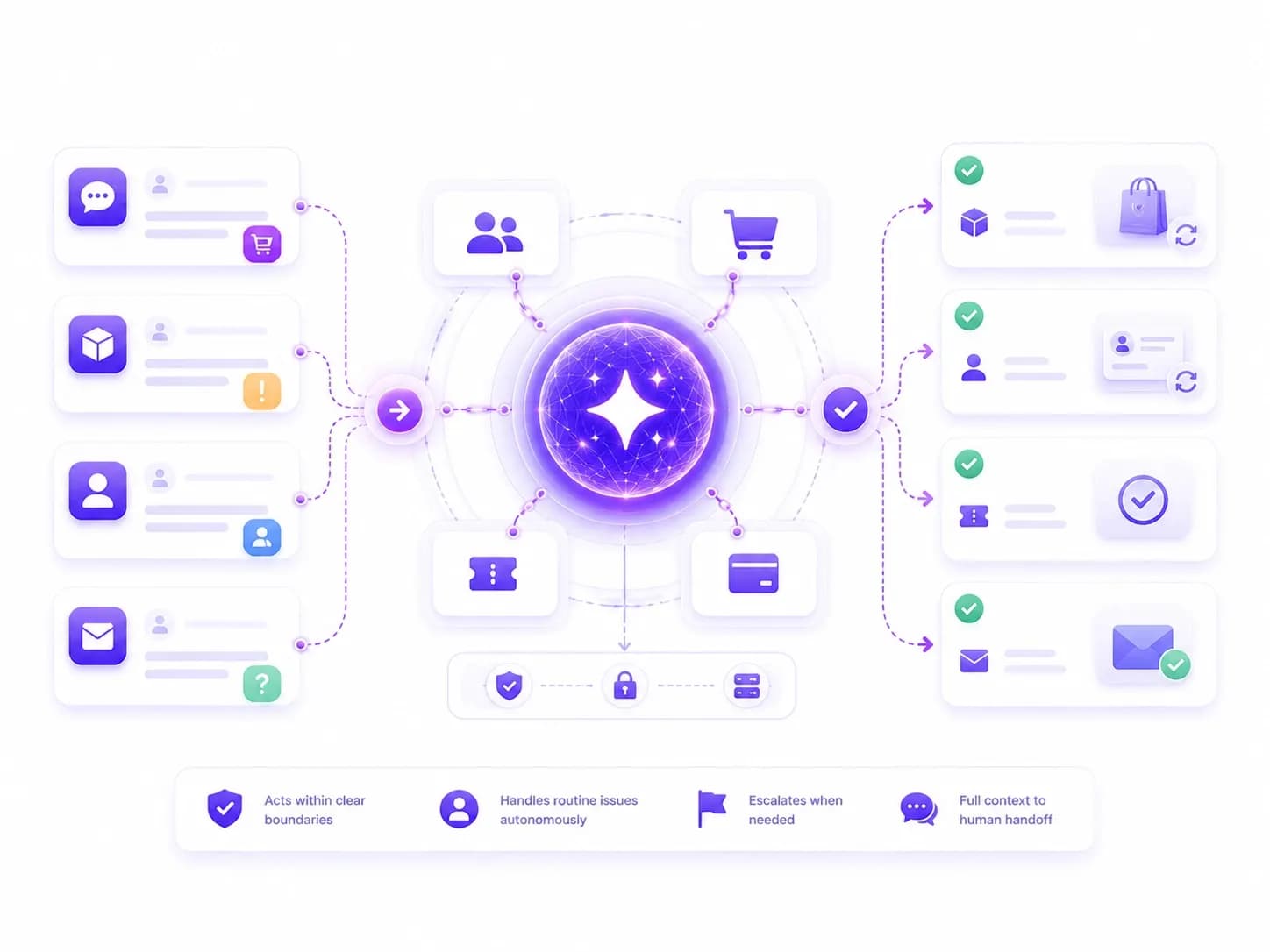
- Resolves issues end to end, not just answering questions
- Connected to your real systems to take actual actions
- Clear limits on what it can do without a human
- Escalates sensitive or unusual cases with full context
Sales Agents
A sales agent engages and qualifies leads automatically, around the clock, so prospects are met the moment they arrive rather than going cold while your team sleeps. It answers questions, gauges whether a lead is a genuine fit, gathers the information your sales team needs, and routes qualified prospects to a human while filtering out the noise that would otherwise eat your team's time.
The value is in speed and consistency. Leads engaged within minutes convert far better than leads that wait hours or days, and an agent never gets tired, never forgets to follow up, and applies your qualification criteria the same way every time. Your human salespeople then spend their energy on the warm, qualified prospects the agent surfaces, rather than wading through everything by hand.
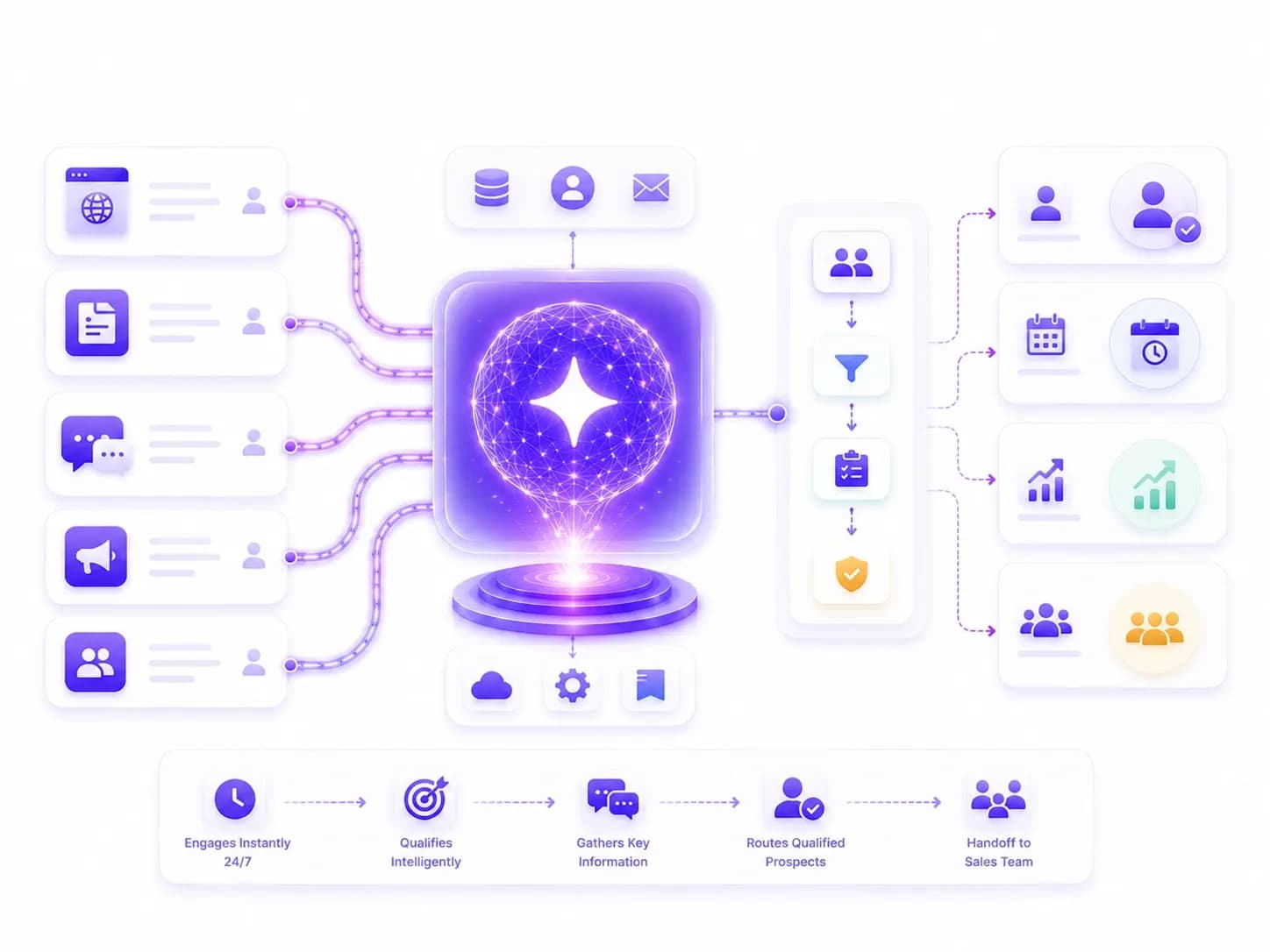
- Engages leads instantly, day or night
- Qualifies against your criteria consistently
- Gathers the information your sales team needs upfront
- Routes genuine prospects to humans, filters out the rest
Internal Knowledge Agents
Every growing company hits the same problem: the knowledge of how things work lives in people's heads, scattered documents, old chat threads and a wiki nobody keeps current. New staff interrupt senior colleagues constantly, and when an experienced person leaves, their knowledge walks out with them. An internal knowledge agent answers your team's questions from your own documentation and systems, so the answers are there without the interruptions.
We build knowledge agents grounded strictly in your real internal content, your docs, wikis, policies and systems, so they answer from what your company actually knows rather than inventing plausible-sounding guesses. New employees get up to speed faster, everyone finds answers without breaking a colleague's focus, and institutional knowledge stops being so fragile. Crucially, the agent is built to say it does not know rather than fabricate, because a confidently wrong internal answer can be worse than no answer.
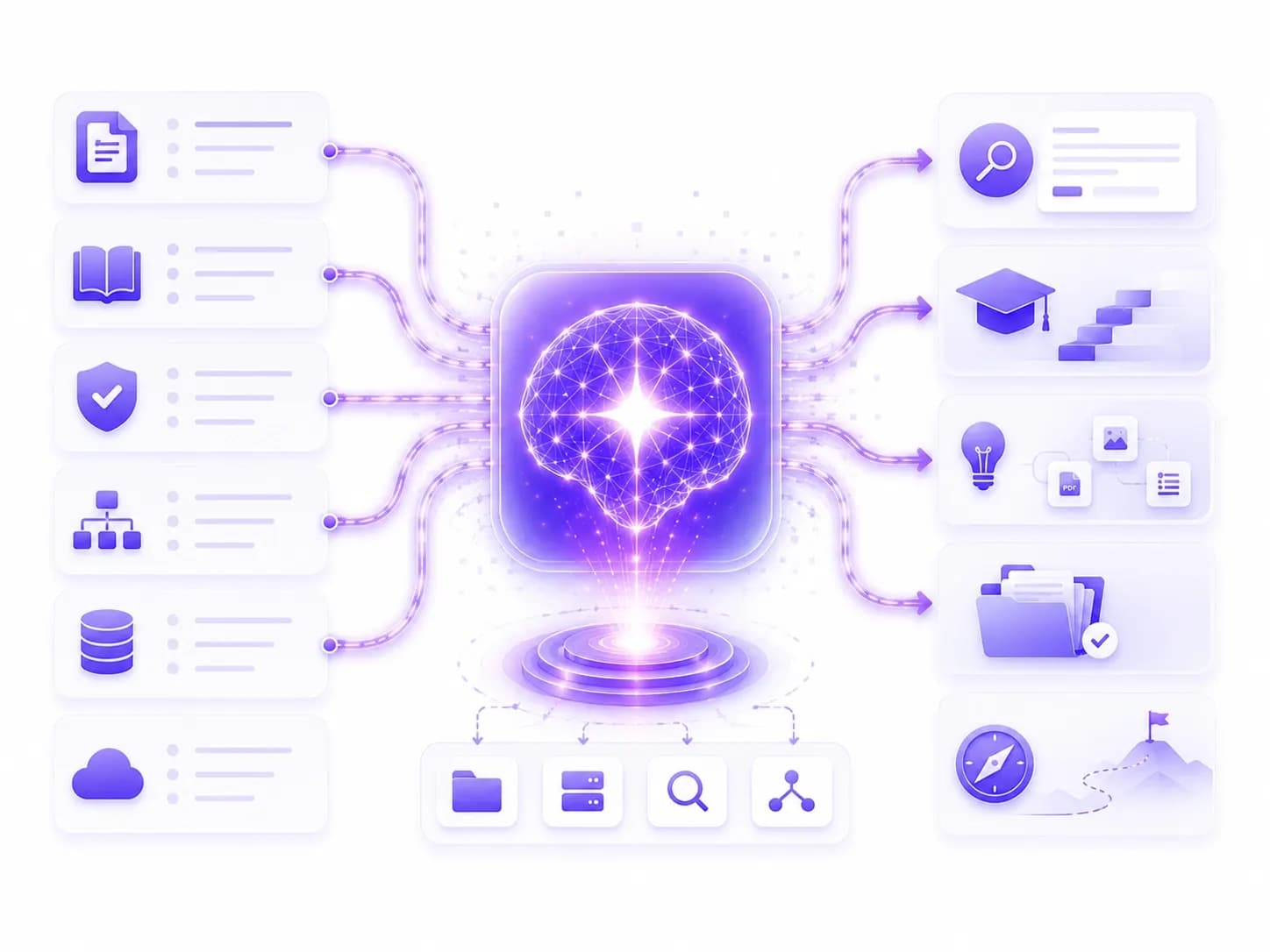
- Answers staff questions from your real internal content
- Cuts interruptions to senior colleagues
- Helps new hires get up to speed quickly
- Grounded strictly in your content, built to say when it does not know
Workflow Automation Agents
Simple automation handles fixed rules: when this happens, do exactly that. But a lot of real work is not that tidy. It involves checking something, weighing a couple of factors, deciding, and then doing several things in sequence, with the occasional case that needs human judgement. That is where a workflow agent fits, between rigid automation and a full human, handling the multi-step tasks that need a little intelligence but not a person every time.
We build workflow agents that complete these multi-step internal tasks, taking a process that currently bounces between people and systems and letting the agent carry it through, escalating only the cases that genuinely need a human. Where business process automation handles the predictable, an agent handles the cases that vary, which extends how much of a workflow you can realistically take off your team's plate.
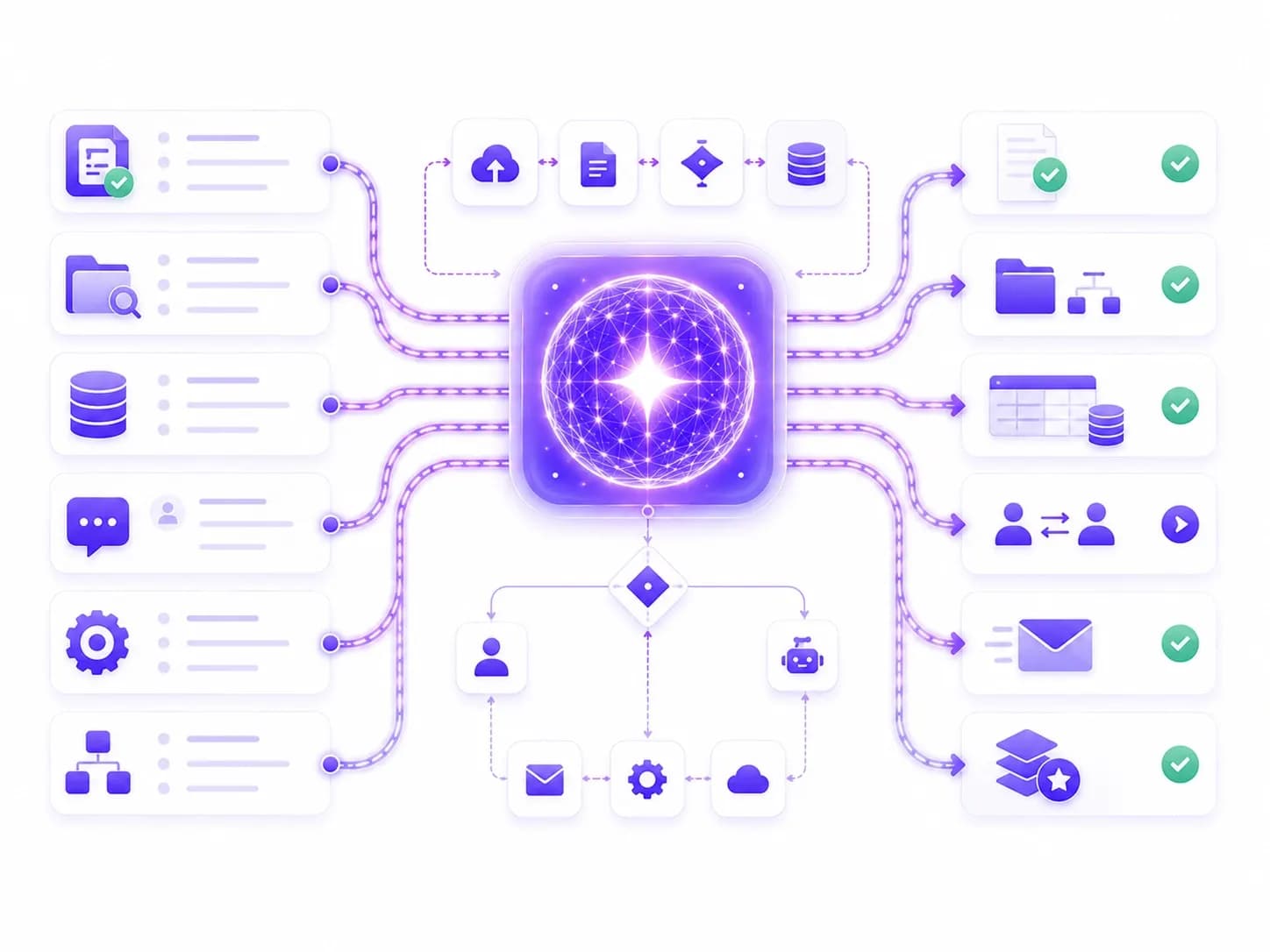
- Completes multi-step tasks that need light judgement
- Sits between fixed automation and full human handling
- Carries a process through rather than bouncing it between people
- Escalates the cases that genuinely need a human
Multi-Agent Systems
For complex work, a single agent trying to do everything becomes unwieldy. The better pattern is several specialised agents working together, each handling the part it is best at and coordinating with the others, much like a team of people with different roles. One agent might gather information, another might analyse it, another might take action, all orchestrated toward a larger goal.
This is the frontier of practical AI, and it is powerful precisely because it can tackle work too complex for any single agent. It is also where complexity, and therefore risk, multiplies fastest, so we build multi-agent systems with particular care: clear roles and boundaries for each agent, defined handoffs between them, and oversight of the system as a whole. Done well, a multi-agent system handles genuinely sophisticated work. Done carelessly, it becomes an unpredictable tangle, which is exactly why the engineering discipline matters most here.
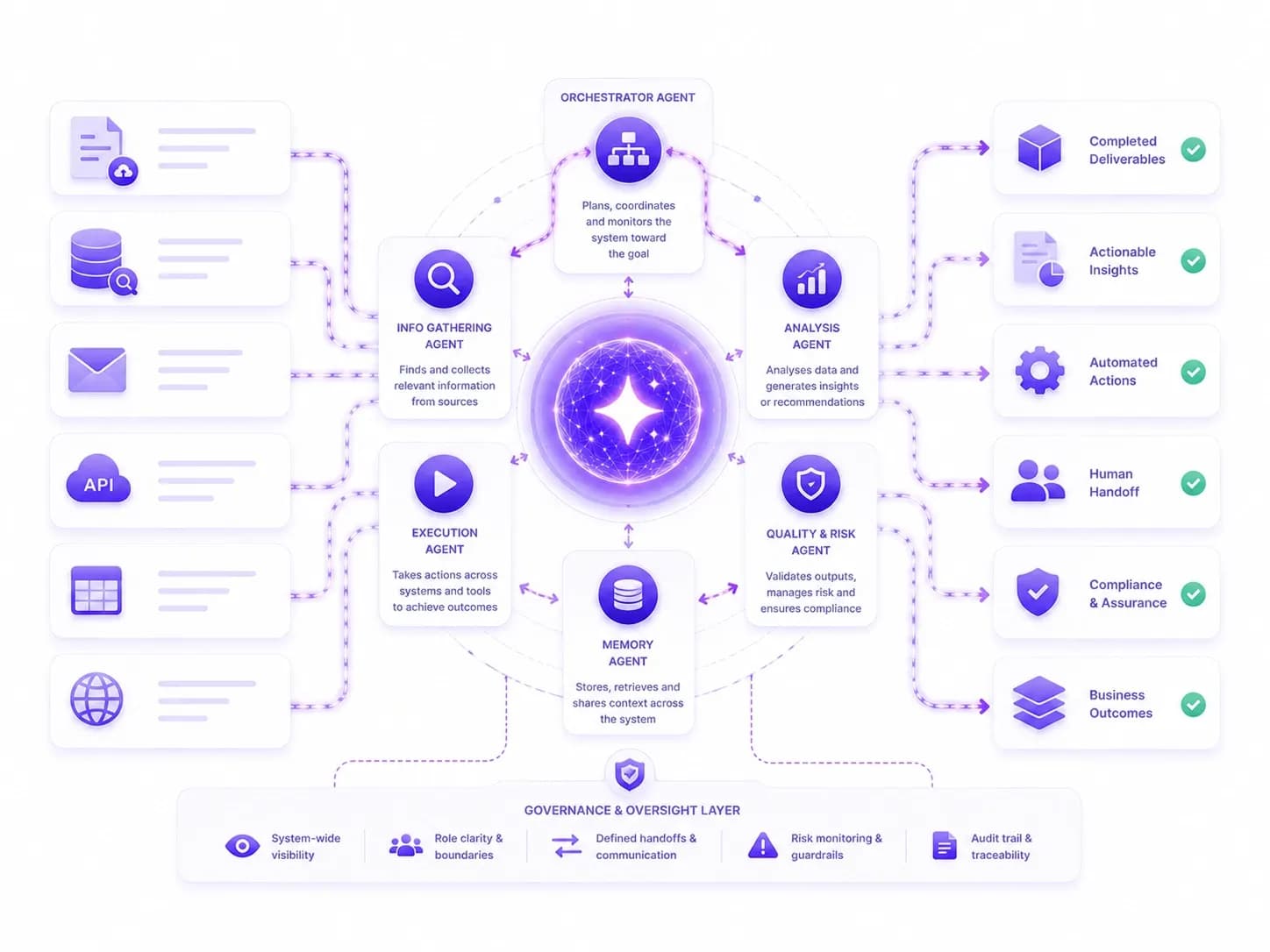
- Specialised agents collaborating on complex work
- Each with a clear role and defined boundaries
- Orchestrated toward a single larger goal
- Built with system-wide oversight, because complexity multiplies risk
How We Build Agents You Can Trust
An agent that acts on your behalf has to be trustworthy, and trust is engineered, not hoped for. These are the principles we hold to on every agent we build.
Clear boundaries on autonomy
We define precisely what an agent may do on its own and what requires human approval. A support agent might issue a small refund autonomously but need sign-off for a large one. Drawing these lines deliberately is the foundation of a safe agent, and we set them with you rather than guessing.
Human oversight where it counts
For consequential actions, we build in human approval steps, so the agent proposes and a person confirms. This keeps the speed of automation for the routine while keeping a human hand on anything that genuinely matters.
Escalate, never bluff
We build agents to recognise the limits of what they can handle reliably and escalate to a human rather than guessing. An agent that hands off cleanly when unsure is far more valuable than one that confidently does the wrong thing, so we make escalation a first-class behaviour.
Grounded and observable
Agents are grounded in your real data and built so you can see what they are doing and why. When an agent takes an action, there is a record of the reasoning and the steps, so the system is auditable rather than a black box, which matters enormously when something acts on its own.
Visualizing AI Agent Use Cases in Action
An AI agent can do much more than simply chat with your customers. Modern AI agents can integrate with business systems, retrieve real-time information, complete actions on behalf of customers, and seamlessly escalate issues to human teams when necessary. By combining intelligent decision-making with workflow automation, AI agents help businesses respond faster, operate more efficiently, and deliver exceptional customer experiences at scale.
Answers to Action
Traditional chatbots can tell customers how to check the status of an order. AI agents take that experience a step further. By connecting directly to your business systems, an AI agent can locate customer information, verify shipment details, and provide accurate updates in real time. Instead of simply offering instructions, the agent completes the task and delivers the answer the customer needs.
Escalate to a Human When It Makes Sense
Automation is powerful, but not every situation can or should be handled by AI alone. When customers encounter complex issues that require human judgment, AI agents recognize their limitations and automatically escalate the conversation to the appropriate team member. All relevant information is transferred along with the case, reducing response times and ensuring a smoother customer experience.
End-to-End Workflow Automation
Imagine an AI agent capable of managing repetitive customer support requests, lead qualification processes, and knowledge-based inquiries from start to finish with minimal human involvement. Beyond customer-facing tasks, AI assistants can automate internal business workflows, streamline operations, and eliminate manual bottlenecks. The result is greater productivity, improved efficiency, and more time for your team to focus on strategic work.
Why AI Agents Deliver Business Value
AI agents require more planning and engineering than traditional automation, but for the right use cases, they can deliver significant operational value. By handling multi-step tasks, following business rules, and taking action independently, agents help businesses improve efficiency, increase productivity, and scale operations with confidence.

Key Benefits
05- Complete end-to-end workflows instead of simply generating responses
- Operate around the clock, reducing delays and improving responsiveness
- Apply business rules consistently across repetitive and time-sensitive tasks
- Help teams manage higher workloads without increasing operational overhead
- Free employees to focus on strategic, creative, and customer-facing work
Agent, Chatbot, or Automation?
These three get confused, and choosing the wrong one wastes money. Here is the clear difference, and when each is the right call.
Chatbot
A chatbot answers questions in conversation. If your need is simply to respond to questions, a chatbot or conversational AI is the most direct and affordable fit.
Automation
Automation performs fixed, rule-based actions reliably. For a predictable, repeatable task at scale, it is simpler and cheaper than an agent.
AI Agent
An agent sits above both. Give it a goal and it works through variable steps to reach it — looking things up, acting along the way, and escalating to a human when it should. Many real systems combine all three, and part of our job is choosing the right tool for each part of your problem.
Frequently Asked Questions
Choosing the right AI agent strategy starts with understanding what agents can do, where they deliver the most value, and how they fit into your existing business processes. These answers address the questions we hear most often from teams exploring AI agent development.
A chatbot answers questions in conversation, it tells you things. An agent acts: given a goal, it plans and takes a series of steps to achieve it, looking things up, calling your systems, and making decisions, escalating to a human when needed. A chatbot might explain how to change your order; an agent actually changes it. Agents are more powerful and require more careful engineering as a result.
It is when the agent is built properly, which is exactly where the engineering matters. We define clear boundaries on what the agent may do autonomously, require human approval for consequential actions, and build it to escalate rather than guess when unsure. We also make its actions auditable, so you can see what it did and why. An agent without those guardrails is risky; one built with them is safe to trust within its defined limits.
Agents act through your existing systems, your CRM, support desk, order system, internal tools, anything with an integration point. During the project we map which systems the agent needs to read from and act on, then build those connections securely. Connecting to your real systems is what lets an agent take actions rather than just talk about them.
It escalates to a human with the full context attached, rather than guessing. We build agents to recognise the limits of what they can do reliably, and treat clean escalation as a core behaviour, not a failure. A customer or colleague picks up where the agent stopped, with everything the agent gathered already in hand, so nothing has to be repeated.
Regular automation follows fixed rules: when this exact thing happens, do this exact action. It is reliable and cheap for predictable tasks. An agent handles tasks where the right steps vary and a degree of judgement is needed, planning its approach rather than following a fixed script. We use automation for the predictable parts and agents for the variable parts, often within the same system, choosing the simpler tool wherever it suffices.
In practice agents change roles rather than removing them. They take the high-volume, repetitive work, qualifying leads, resolving routine support, answering internal questions, and free your people for the complex, relationship-driven and judgement-heavy work that agents handle poorly. The businesses that benefit most use agents to let a small team achieve what would otherwise need a much larger one, rather than to cut staff outright.
A focused agent connected to one or two systems can be built in a few weeks. More complex agents, or multi-agent systems spanning several systems with significant guardrails, take longer, typically a couple of months. We build and test the boundaries and escalation carefully before going live, because an agent that acts needs to be trustworthy from day one rather than learning on real cases.
Yes. Agents handle your real business and customer data by nature, so we build to GDPR and AVG, keep data in EU regions where required, and control exactly what data the agent can access and act on. Combined with the auditability we build in, you have a clear record of what the agent did with what data, which is important for both security and compliance.