CI/CD Pipelines That Make Releases Routine
Manual deploys are slow, stressful and exactly where mistakes happen. A good CI/CD pipeline tests every change automatically and ships it safely, so releasing becomes a non-event your team does several times a day instead of a Friday-night gamble. We build pipelines with GitHub Actions and Jenkins.
Start Your Project- Senior engineer replies within 24 hours
- NDA on request
- No obligation
Describe your project
Share a few details and our team will reach out to you within 24 hours.
Why Manual Deployment Quietly Costs You
CI/CD Pipelines — automated testing and deployment so releases stop being a source of dread.
Many teams still deploy software manually. A developer finishes a change, copies files to a server, runs commands, and hopes nothing is missed. While this often works, a forgotten step, incorrect configuration, or missed database update can quickly lead to costly problems. Because deployments feel risky, teams tend to release changes less frequently, making each deployment larger and harder to troubleshoot.
Continuous Integration and Continuous Delivery (CI/CD) eliminate this risk by automating the entire deployment process. Instead of relying on manual steps, a pipeline automatically runs tests, builds releases, and deploys changes consistently every time. The result is a faster, more reliable deployment process with fewer errors.
When deployments become safe and predictable, teams can release smaller updates more often. Issues are identified earlier, rollbacks become easier, and developers spend less time troubleshooting and more time building. This creates a more efficient workflow and gives teams greater confidence in every release, and it fits within our wider DevOps services that keep the whole product running.
What CI/CD Actually Does
The two halves do different jobs. Continuous integration, the CI half, means every code change is automatically built and tested the moment it is pushed. If a change breaks something, the team knows in minutes, not after launch. Continuous delivery or deployment, the CD half, means that once a change passes its tests, it is automatically prepared for release, or released outright to users. Together they turn shipping from a risky manual chore into a reliable, repeatable process that runs itself.
Automatic testing
Every change is tested automatically before it merges
Fast failure detection
Broken code is caught in minutes, not after it reaches users
Safe, repeatable deploys
Deploys are repeatable and easy to roll back
Frequent smaller releases
Releases happen more often, in smaller, safer increments
Less manual deployment work
Less time spent on manual deployment and weekend firefighting
Clear audit trail
A clear, auditable record of what shipped and when
The CI/CD Tools We Use
We leverage industry-leading CI/CD tools to automate testing, deployment, and delivery workflows, helping teams release software faster, more reliably, and with greater confidence.
GitHub Actions
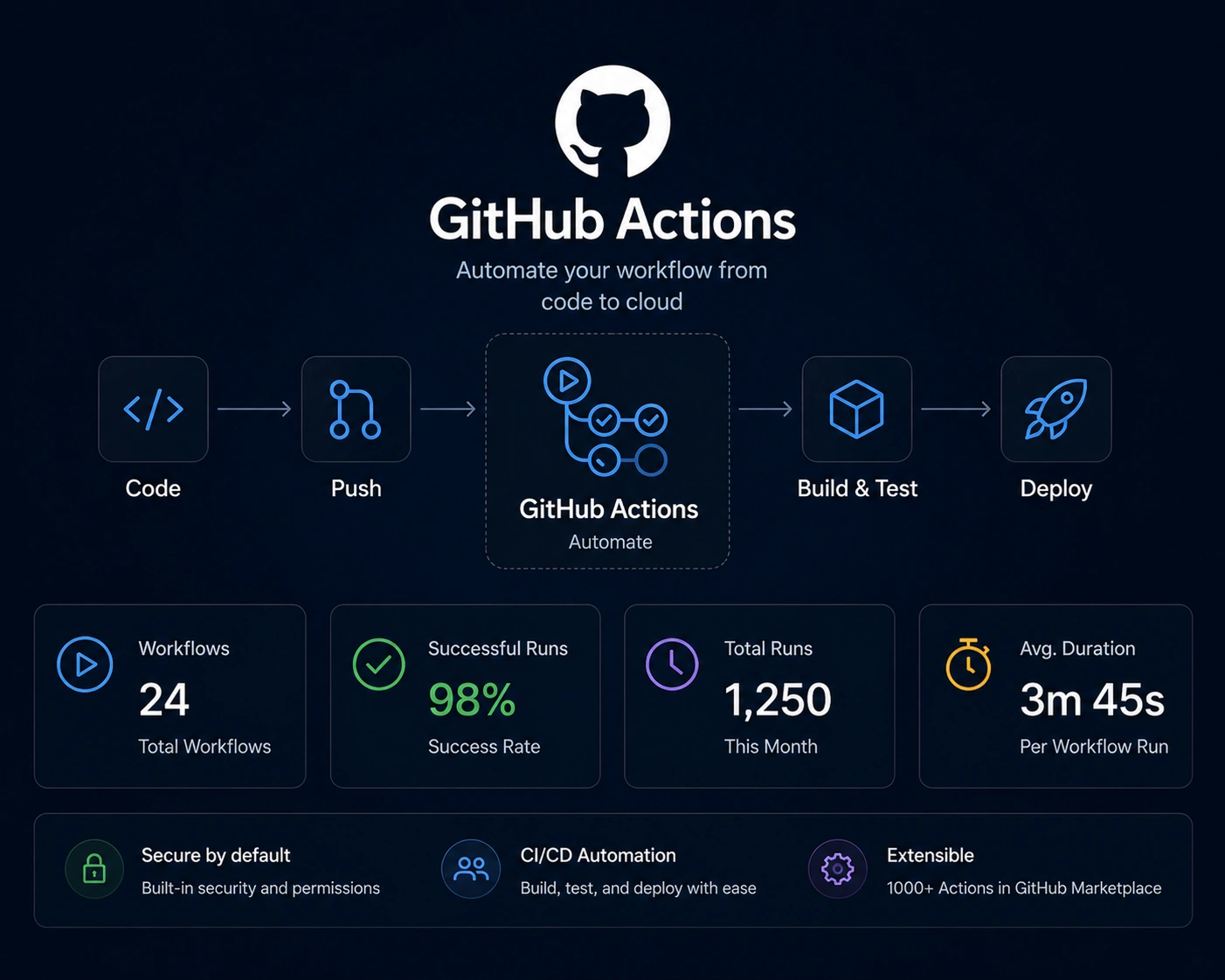
For any project already living on GitHub, GitHub Actions is the fastest way to add a real CI/CD pipeline. The pipeline lives as simple configuration files right alongside the code, there is no separate server to host or maintain, and it scales from a one-person side project to a large team without changing tools. There is also a huge library of ready-made actions for common tasks, so you are rarely building from scratch. For most modern products, this is where we start.
Best for: products already on GitHub, smaller teams, and anyone who wants a capable pipeline without running infrastructure to support it.
- Built directly into GitHub, with no separate server to maintain
- Pipelines defined as code, version-controlled next to your project
- Huge library of ready-made actions and integrations
- Cost-effective and low-maintenance for most teams and project sizes
Jenkins
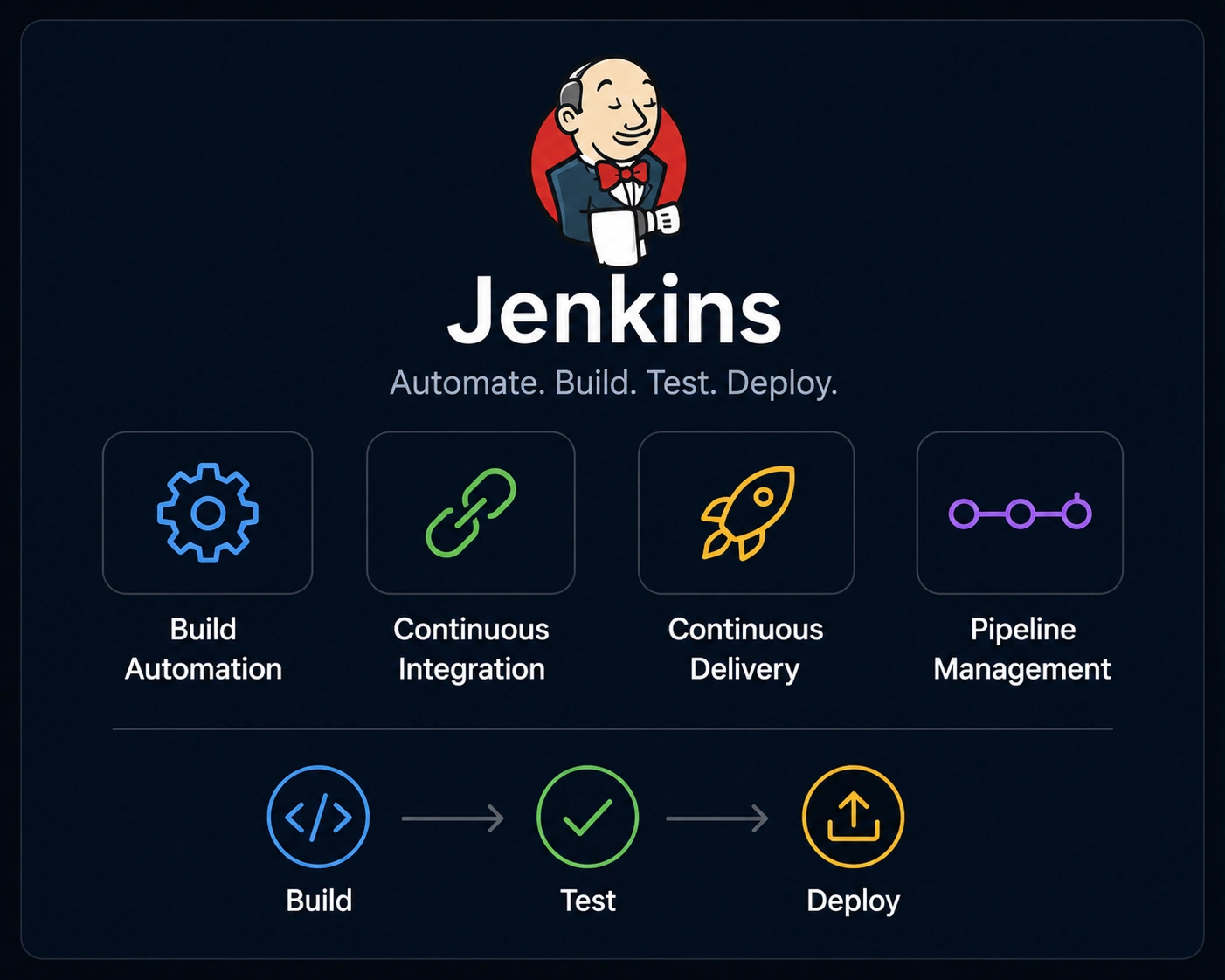
Jenkins is the most flexible and battle-tested CI/CD tool available, and it is the right choice when you need full control or have complex, self-hosted requirements. It runs on your own infrastructure, which matters for regulated environments where pipelines and code must stay in-house, and its vast plugin ecosystem means it can integrate with almost anything, including older or unusual systems that newer tools do not support. It demands more setup and maintenance than GitHub Actions, but in return it gives you control that hosted tools cannot.
Best for: regulated industries needing on-premise pipelines, complex custom requirements, and teams with an existing Jenkins investment.
- Self-hosted, giving you full control over the entire pipeline
- An enormous plugin ecosystem that integrates with almost anything
- Suits complex, regulated or air-gapped environments
- Proven at scale across large enterprises for many years
GitHub Actions or Jenkins?
Choosing the right CI/CD platform depends on your infrastructure, compliance requirements, and long-term goals. We help businesses evaluate the best solution for their needs, balancing simplicity, flexibility, scalability, and operational overhead.
We Recommend What Fits Best
Every team is different. Rather than pushing a specific tool, we evaluate your requirements, infrastructure, compliance needs, and growth plans to recommend the CI/CD platform that delivers the best long-term value for your business.
What This Looks Like in Practice
The benefits of CI/CD become clear when you see how automated pipelines transform the software delivery process. By reducing manual work and deployment risk, teams can release updates faster, resolve issues sooner, and deliver a more reliable experience for users.
The Challenge of Manual Deployments
Many teams still rely on manual deployment processes that are slow, stressful, and prone to human error. As applications grow, these challenges become more difficult to manage and can impact release quality.
Automated Testing & Deployment
A CI/CD pipeline automatically builds, tests, and deploys changes through a consistent workflow. This reduces deployment risk, improves reliability, and eliminates repetitive manual tasks.
Faster Releases & Easier Rollbacks
Smaller, more frequent releases make it easier to identify issues, validate changes, and roll back updates when necessary. Teams gain greater confidence in every deployment.
Better Productivity & Team Confidence
When deployments become predictable and automated, developers spend less time troubleshooting and more time building valuable features that drive business growth.
What We Build Into Your Pipeline
Every CI/CD pipeline is designed to automate key stages of software delivery, helping teams release updates faster, improve quality, and reduce deployment risk.
Build
Code is automatically compiled and prepared in a clean, consistent environment, ensuring reliable builds every time.
Test
Automated tests validate code quality and functionality before changes move further through the pipeline.
Security & Quality Checks
Built-in security scans and quality checks help identify issues early, reducing risks before deployment.
Package & Deploy
Approved changes are packaged and deployed to staging or production environments through an automated process.
Frequently Asked Questions
Find answers to common questions about CI/CD pipelines, deployment automation, software delivery, testing workflows, and DevOps best practices.
Continuous integration (CI) automatically builds and tests every code change as it is pushed, catching problems early. Continuous delivery or deployment (CD) takes changes that pass their tests and automatically prepares them for release, or releases them outright. In short, CI keeps the codebase healthy, and CD gets working code to users quickly and safely. Most teams want both working together.
If your code is on GitHub and you want the simplest path, GitHub Actions is usually the better choice, with no server to maintain and pipelines that live with your code. Jenkins suits teams that need self-hosting for compliance, have complex custom requirements, or already run it successfully. We help you choose based on your stack and constraints, and we can run both where a project genuinely needs it.
A basic pipeline that builds, tests and deploys can be set up in one to two weeks. More complex pipelines, with multiple environments, approval gates, security scanning and container builds, take longer. We scope it to your project and deliver in stages, so you get value early rather than waiting for the whole thing to be finished before anything works.
Yes. Adding CI/CD to an existing codebase is one of the most common things we do. We review how you currently build and deploy, then introduce automated testing and deployment incrementally, so the team adopts it without disruption to ongoing work. You do not have to pause development while the pipeline is built.
Yes, and they work best together. A typical pipeline we build creates a Docker container, runs the tests against it, and deploys it to your cloud or Kubernetes cluster automatically. We connect CI/CD, containers and cloud into one smooth path from a developer's commit all the way to running in production, with checks at every stage.
A well-built pipeline makes rollback simple. Because each deploy is versioned and repeatable, reverting to the last working version is fast and low-risk. We build in automated checks that can halt a bad deploy before it ever reaches users, and clear rollback steps for the rare cases where something slips through. The aim is that a failed deploy is an inconvenience, not a crisis.
The opposite, in our experience. There is a small upfront cost to set it up and to write tests, but after that developers move faster, not slower, because they spend far less time on manual deployment and on hunting down bugs that the pipeline would have caught immediately. The confidence to ship small changes often is what speeds a team up.