AI Automation That Gives Your Team Their Time Back
Every business runs on repetitive work that nobody enjoys and everybody has to do, sorting email, qualifying leads, updating the CRM, handling routine tickets. AI automation takes that work off your team's plate and escalates to a human only when one is genuinely needed. The least glamorous kind of AI, and frequently the most profitable.
Start Your Project- Senior engineer replies within 24 hours
- NDA on request
- No obligation
Describe your project
Share a few details and our team will reach out to you within 24 hours.
The Unglamorous AI That Actually Pays for Itself
Engineering discipline over hype — that is the thread through every kind of AI development we do.
AI automation may not generate the same excitement as generative AI or AI agents, but it is often the fastest way for businesses to achieve measurable results, and it is among the most practical of our AI development services. Its value comes from eliminating repetitive work, giving teams more time to focus on tasks that require expertise, creativity, and decision-making.
Many business processes involve routine activities such as sorting emails, qualifying leads, updating CRM records, processing requests, or answering common customer questions. While necessary, these tasks consume valuable time without making the best use of skilled employees. AI automation helps by handling these processes efficiently and consistently.
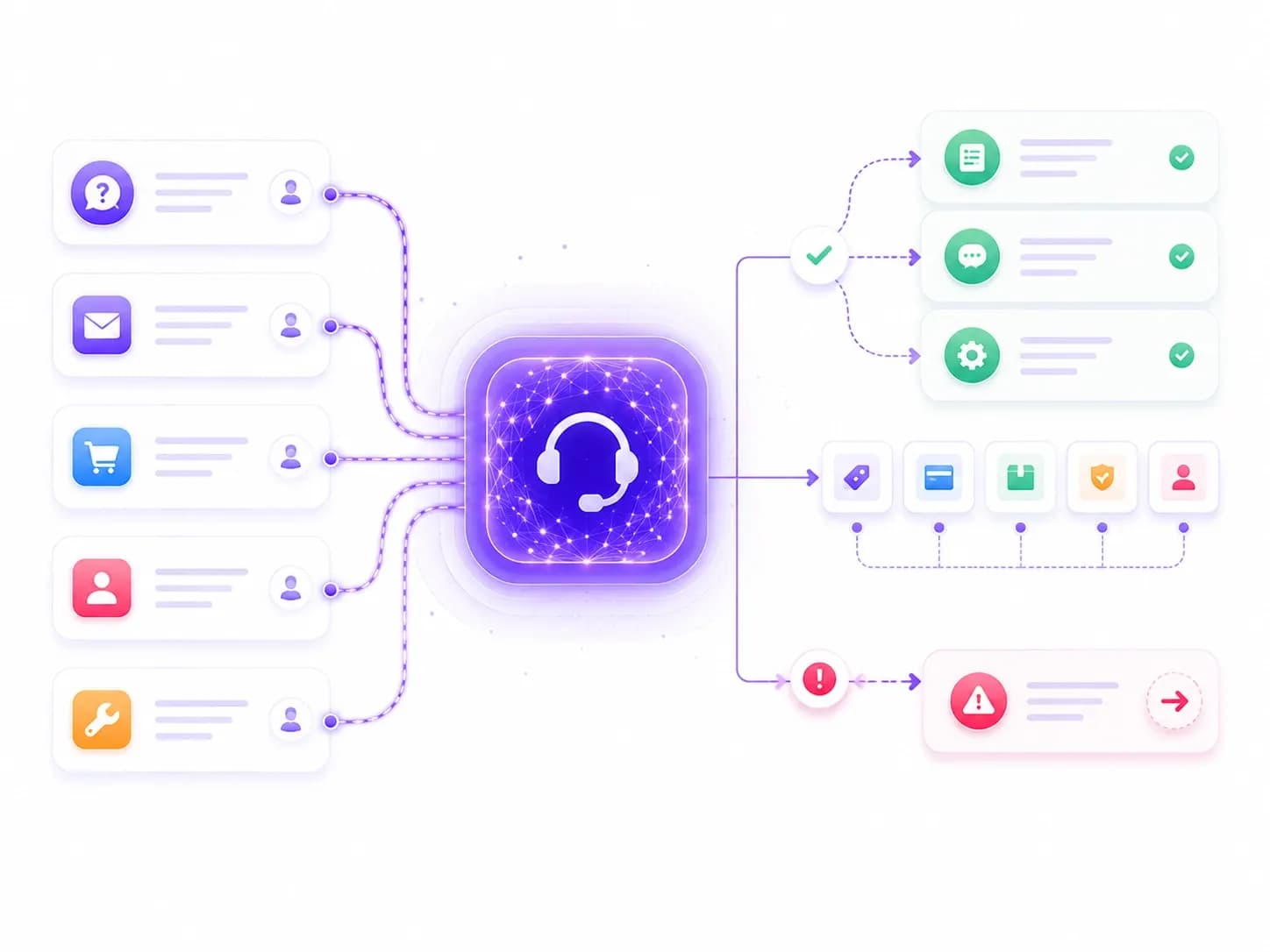
Unlike traditional automation, AI-powered automation can understand language, process unstructured information, and adapt to variations in everyday workflows. It can manage routine tasks from start to finish while escalating exceptions to the appropriate team member when human judgment is required.
The benefits are easy to measure. Businesses often see reduced operational costs, faster response times, improved accuracy, and higher productivity. Just as importantly, automation removes repetitive work that can lead to frustration, allowing employees to focus on more meaningful and rewarding responsibilities.
Our AI Automation Services
We design AI automation solutions that reduce manual work, improve efficiency, and streamline business operations. By automating repetitive processes, teams can focus on higher-value work while achieving faster and more consistent outcomes.
Business Process Automation
Most businesses have a handful of internal processes that everyone knows are inefficient but nobody has had time to fix, the multi-step routines that bounce between people and systems, eating time at every handoff. Business process automation takes these processes and lets AI carry them through, handling the routine path automatically and leaving clean handoffs to humans for the exceptions.
We start by mapping the process as it actually runs, not as the org chart says it should, then identify which steps a model can own reliably and automate those end to end. The result is a process that runs itself for the common cases and only pulls in a person when something genuinely needs judgement. Because we map the real process first, we automate what actually consumes time rather than what looks impressive on a slide.
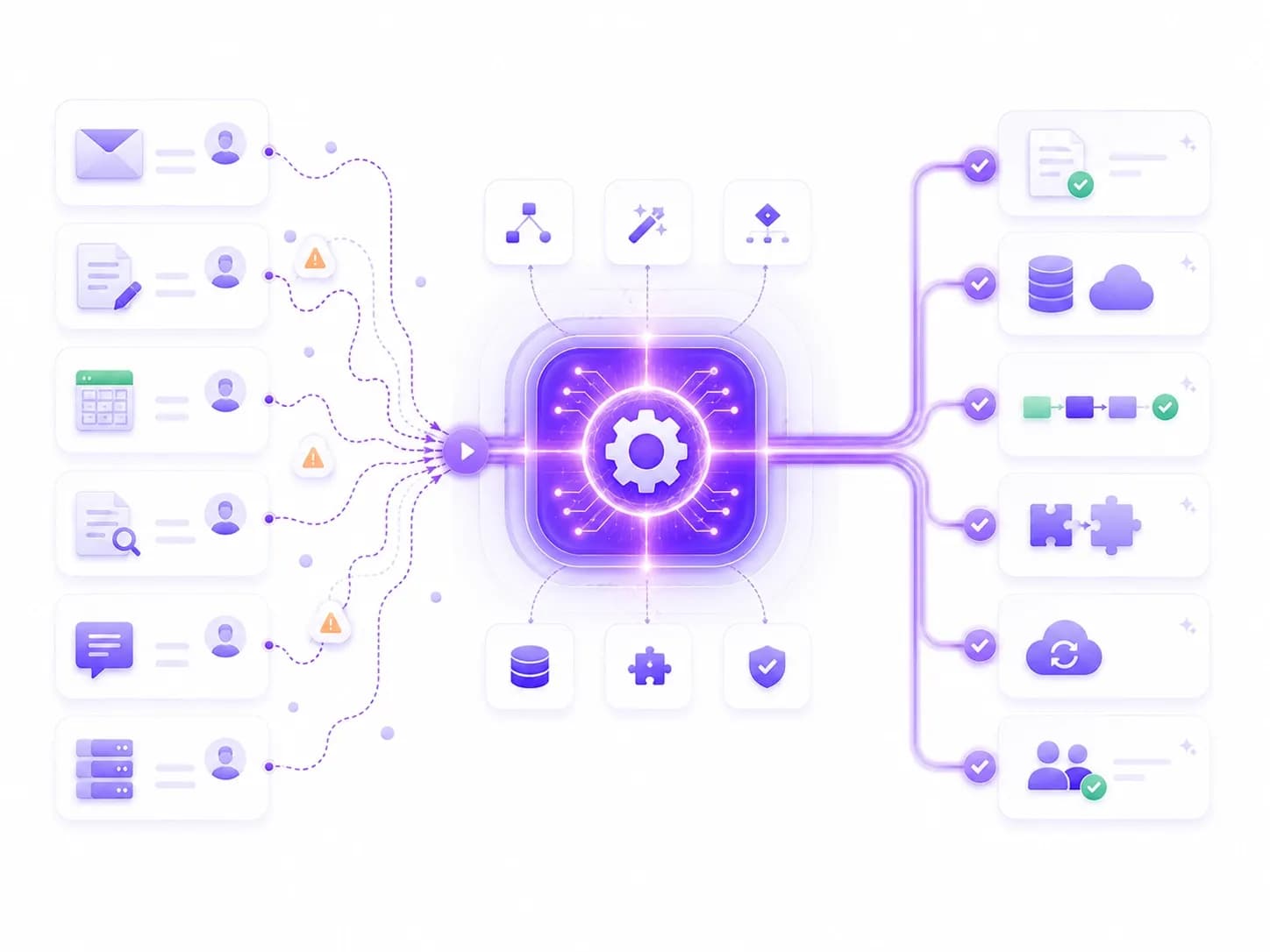
- Automates the routine path of multi-step internal processes
- Mapped from how the process really runs, not the theory
- Clean handoffs to humans for the exceptions
- Targets the steps that actually eat time
Email Automation
For many teams, email is the single biggest time sink of the day. It arrives constantly, it has to be read and understood, sorted, prioritised, and replied to, and a large share of it is routine. Email automation uses AI to read incoming email, understand what it is about, sort and prioritise it, draft routine replies for review or send them within set rules, and make sure nothing important slips through.
Unlike old keyword-based email rules, AI email automation actually understands the content of a message, so it can route a genuine support request differently from a sales enquiry differently from spam, even when none of them use the obvious keywords. For teams handling high email volume, customer-facing inboxes, support addresses, sales enquiries, this alone can give back hours every single day, and it does it consistently rather than depending on whoever happens to be watching the inbox.
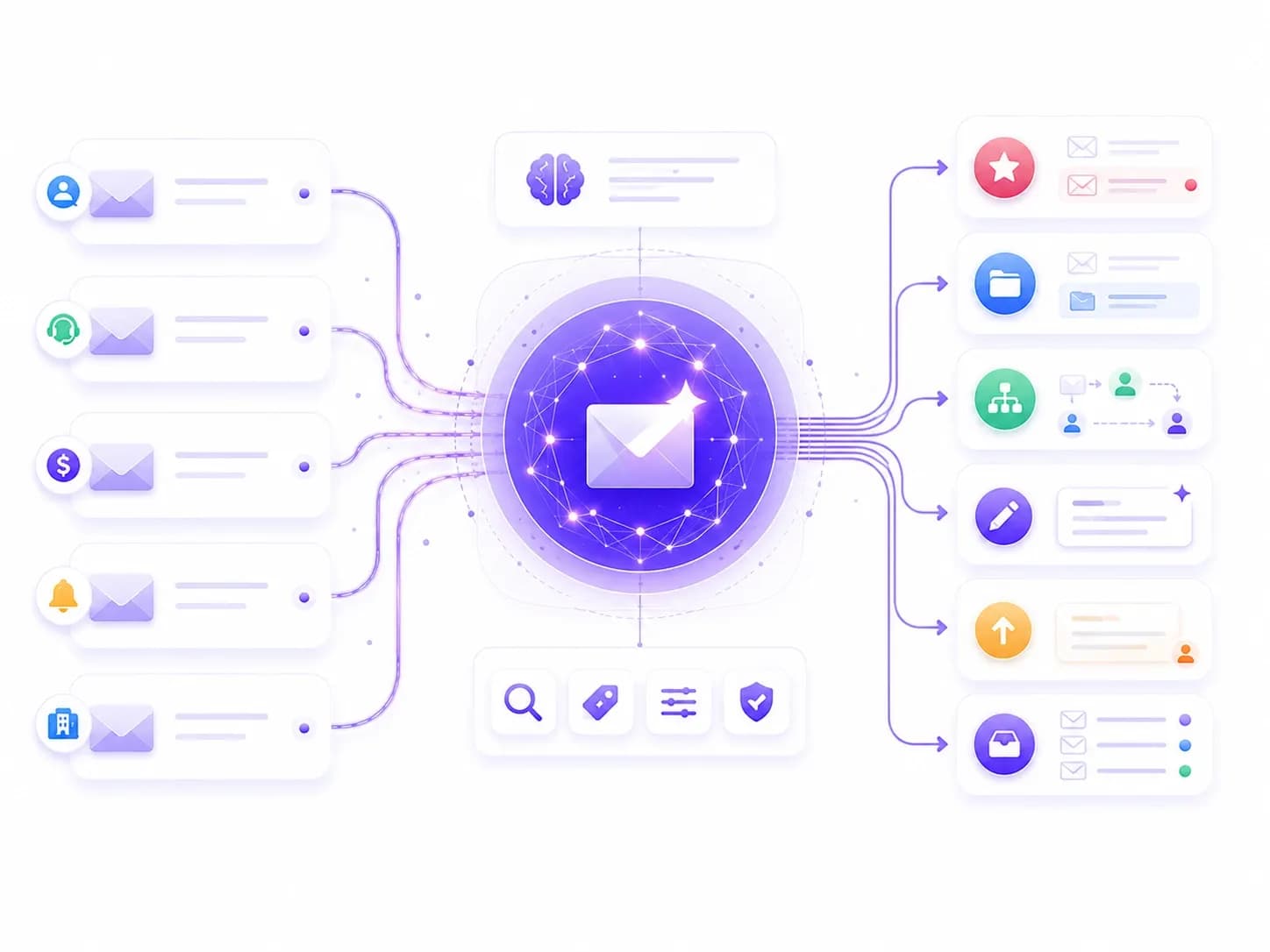
- Reads and understands email content, not just keywords
- Sorts, prioritises and routes incoming mail automatically
- Drafts routine replies for review, or sends within set rules
- Ensures important messages never slip through
Lead Qualification
Sales teams waste enormous amounts of time on leads that were never going to convert, simply because someone has to look at each one to find that out. Lead qualification automation scores and sorts incoming leads against your criteria automatically, so your team spends its energy on the prospects most likely to convert rather than wading through everything by hand.
The AI assesses each lead on the signals that actually matter for your business, company size, intent, fit, budget indicators, whatever your real qualification criteria are, and surfaces the ones worth a human's attention while filtering out the noise. It does this instantly, around the clock, applying the same standard every time. Your salespeople get a focused list of qualified prospects instead of a raw firehose, and good leads get attention while they are still warm.
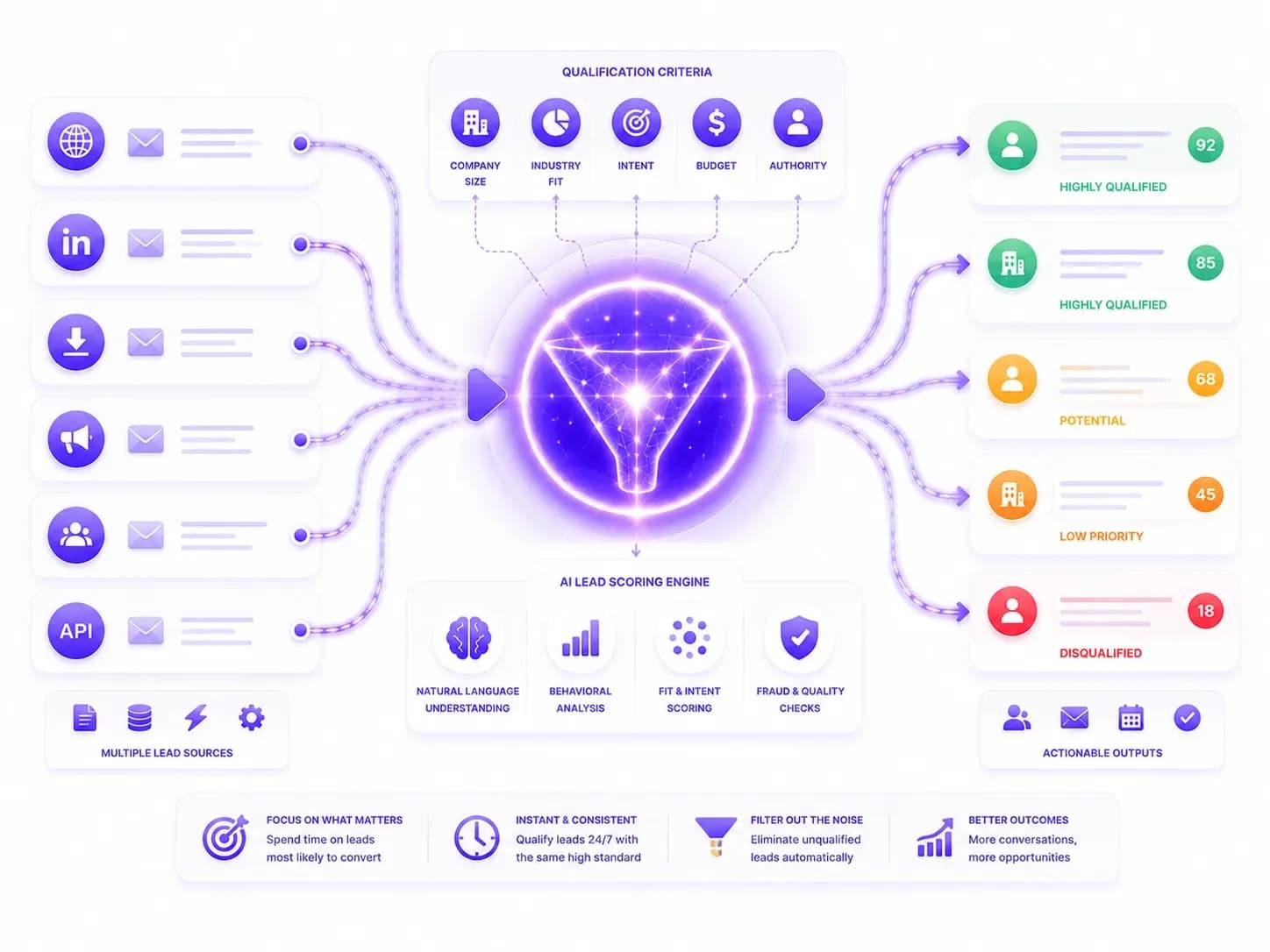
- Scores and sorts leads against your real criteria
- Surfaces the prospects most likely to convert
- Filters out the noise so the team focuses where it counts
- Works instantly and consistently, around the clock
CRM Automation
Everyone agrees the CRM should be kept up to date. Almost nobody enjoys keeping it up to date, which is why most CRMs drift steadily out of sync with reality, full of stale records and missing the details that were never logged. CRM automation fixes this by capturing and updating records automatically from the interactions that already happen, emails, calls, meetings, so your CRM reflects what is actually going on without anyone doing manual data entry.
The AI extracts the relevant information from interactions and updates the right records, so contact details, conversation history and deal status stay current as a by-product of normal work rather than as a chore everyone postpones. A CRM that is actually accurate is far more valuable than one that is merely populated, and CRM automation is what keeps it accurate without the discipline that humans reliably fail to maintain.
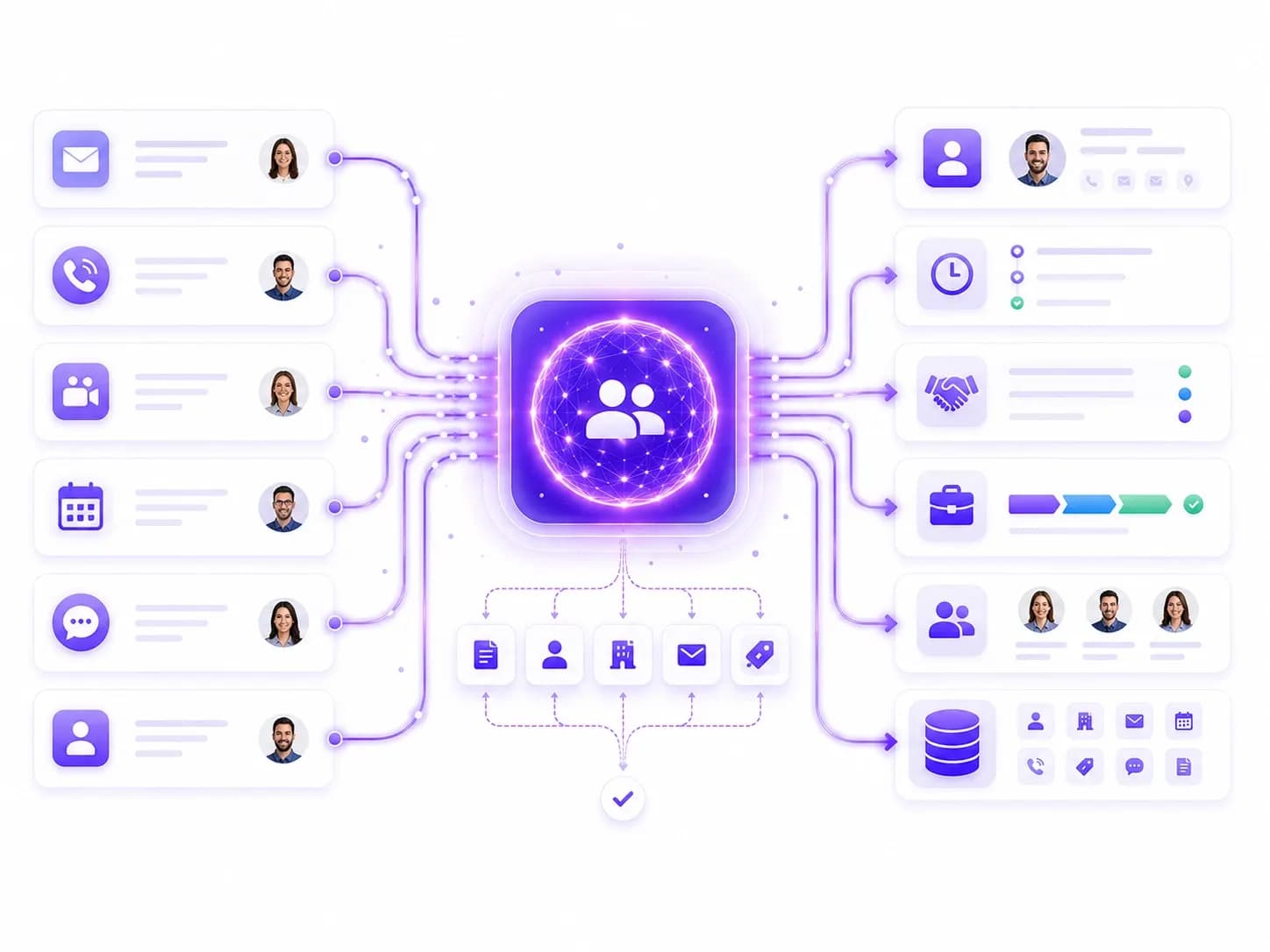
- Captures and updates CRM records automatically
- Extracts details from emails, calls and meetings
- Keeps contact history and deal status current
- Removes the manual data entry everyone avoids
Customer Support Automation
In most support queues, a large share of tickets are variations on the same common, repetitive issues, the questions and requests that come up again and again and do not need a human's judgement to resolve. Customer support automation handles these routine tickets automatically, resolving the common cases and escalating the genuinely complex ones to your team.
This is closely related to the support work in our conversational AI, but viewed from the automation angle: the goal is to reduce the volume of routine tickets reaching humans at all, so your support team's queue shrinks to the cases that actually need them. Customers get faster answers to common questions, your support staff stop drowning in repetition, and the genuinely difficult cases get the human attention they deserve because the easy ones are no longer in the way.
- Resolves common, repetitive tickets automatically
- Escalates genuinely complex cases to your team
- Shrinks the support queue to what actually needs humans
- Faster answers for customers, less repetition for staff
How We Approach Automation
Effective automation starts with understanding how work actually happens. We focus on improving workflows, automating repetitive tasks, and delivering measurable efficiency gains while ensuring people remain involved where judgment and expertise matter most.
Measure before and after
We start by understanding how much time a process currently takes, so we can estimate the saving before building anything and prove it afterwards. Automation's great advantage is that its return is measurable, and we lean into that rather than asking you to take the benefit on faith.
Fix the process, then automate it
There is no point automating a broken process; you just get the same bad outcome faster. Where a process is genuinely inefficient, we flag it, and sometimes a small change to the process itself delivers more than any automation would. We automate good processes, not bad ones dressed up in AI.
Keep humans on the exceptions
We automate the routine cases and route the exceptions to people, rather than forcing everything through automation and producing wrong outcomes on the unusual cases. Knowing where to draw that line, what is routine enough to automate and what needs a person, is most of the skill.
Start small, expand on results
We usually start with one well-defined, high-volume process, prove the saving, and expand from there. This keeps the risk low and lets you see real returns before committing further, rather than attempting to automate everything at once and hoping it works.
What Automation Looks Like in Practice
Automation delivers the greatest impact when multiple processes work together as a single workflow. These examples show how businesses can reduce repetitive work, improve response times, and create more efficient day-to-day operations.
Intelligent Email Processing
Incoming emails are automatically categorized, prioritized, and routed to the right destination, reducing manual effort and improving response times.
Automated Lead & Customer Management
Sales enquiries, customer requests, and important information are captured, scored, and logged automatically, ensuring nothing gets missed.
Connected Workflow Automation
Multiple automations work together across email, CRM, and business systems to create efficient workflows that save time and improve productivity.
Automation, AI Agents, or Generative AI?
These technologies often work together, but each solves a different type of problem. Choosing the right approach depends on your business goals, workflows, and level of complexity. In many cases, the best solutions combine automation, AI agents, and generative AI to deliver the greatest business value.
Choose Automation When
The process is repetitive, rule-based, and follows a predictable workflow. Automation is ideal for tasks such as data entry, CRM updates, document routing, notifications, and other high-volume operational activities.
Choose AI Agents When
The task requires decision-making, multi-step actions, or interaction across multiple systems. AI agents can pursue goals, adapt to changing conditions, and execute workflows that require more flexibility than traditional automation.
Choose Generative AI When
The goal is to create, summarize, transform, or communicate information. Generative AI is well suited for content creation, document drafting, customer communications, knowledge assistance, and language-based tasks.
What to Automate First
Successful automation starts with identifying the tasks that consume the most time while requiring the least human judgment. Focusing on these high-impact opportunities delivers faster results, measurable savings, and a clear foundation for broader automation initiatives.
Email triage
Sorting a busy shared inbox is high-volume, repetitive and follows a consistent pattern, which makes it one of the fastest automations to prove. Incoming mail is read, understood and routed automatically, so the team starts the day on real work instead of clearing the queue by hand.
Lead qualification
A steady stream of inbound leads is an ideal early target. Each enquiry is scored against your criteria and logged in the CRM automatically, so the sales team spends its time only on the prospects genuinely worth pursuing.
Common support tickets
The most frequent category of support request is repetitive and predictable. Automating it resolves routine tickets instantly and escalates only the genuine exceptions, with time saved that is obvious within weeks rather than months.
Frequently Asked Questions
Exploring AI automation often brings questions about processes, technology, costs, and business impact. These answers cover the topics we discuss most frequently with organizations looking to improve efficiency through intelligent automation.
Traditional automation follows rigid rules and can only handle perfectly predictable tasks, it breaks the moment something varies. AI automation can handle messy, language-heavy, slightly-variable work that used to need a person: reading and understanding an email, judging whether a lead fits, deciding how to handle a routine ticket. It extends automation into the grey areas that rule-based systems never could, which is where most of the remaining manual work lives.
It depends entirely on how much repetitive work your team does by hand, which we measure during discovery rather than promising a figure blindly. The advantage of automation is that the saving is measurable: we estimate the hours a process takes now and the hours it would take automated, so you see the return before committing. For high-volume routine work, the savings are often substantial and quick to appear.
Start with a task that is high-volume, repetitive, fairly consistent, and currently eats a measurable amount of time, email triage, lead qualification, or your most common support ticket type are typical strong starting points. We help you pick the one task that combines the most volume with the least complexity, because that delivers the fastest, clearest return and makes the case for automating more.
Not if it is built properly, because we automate the routine cases and route the exceptions to humans rather than forcing everything through automation. The skill is in drawing that line correctly, what is routine enough to handle automatically and what needs a person. Well-built automation handles the predictable bulk reliably and escalates anything unusual, so the important and unusual cases still get human attention.
Yes. Automation connects to the tools you already use, your CRM, email, support desk and other systems, through their integration points. We map which tools a process touches and build the connections securely, so automation works within your existing setup rather than requiring you to switch tools. Connecting to your real tools is what lets it actually take work off your team.
Yes. Automation handles your business and customer data, including email and CRM content, so we build to GDPR and AVG, keep data in EU regions where required, and control how data is accessed and processed throughout. Our European base in Amstelveen means EU data protection is built into how we handle these projects rather than treated as an afterthought.
In practice it changes what your staff spend time on rather than replacing them. Automation removes the repetitive, low-judgement work, sorting, data entry, routine replies, and frees your people for the work that needs them: complex cases, relationships, and decisions. Most clients use automation to let their existing team handle more without burning out, rather than to reduce headcount.
A focused automation for a single process can often be live within a few weeks. Larger projects automating several processes take longer, but we deliberately start small, prove the saving on one process, then expand. This means you usually see real time savings within weeks rather than waiting months for a big-bang rollout that may or may not deliver.