Machine Learning That Turns Your History Into Foresight
Your historical data holds patterns that predict what comes next, which customers will churn, what demand will be, which lead will convert. Machine learning finds those patterns and turns them into predictions you can plan around. We build predictive analytics, recommendation engines, forecasting and classification, proven on your data before you trust them.
Start Your Project- Senior engineer replies within 24 hours
- NDA on request
- No obligation
Describe your project
Share a few details and our team will reach out to you within 24 hours.
How Machine Learning Actually Works for a Business
Engineering discipline over hype — that is the thread through every kind of AI development we do.
Machine learning becomes valuable when it stops being a technical concept and starts improving business decisions. By learning from historical data, it identifies patterns that help predict future outcomes, whether that means forecasting demand, spotting churn risk, detecting fraud, or identifying opportunities hidden inside your operations.
For businesses with meaningful data, machine learning turns past activity into a competitive advantage. As one strand of our broader AI data & intelligence work, customer behaviour, sales trends, transactions, and operational records become signals that help guide smarter decisions with measurable confidence rather than guesswork.
The important caveat is that machine learning is only as reliable as the data and validation behind it. It pairs naturally with data intelligence, since a model that looks impressive in a demo can become expensive if it is never properly tested. That is why we evaluate every model on unseen data and measure real-world performance before it influences business decisions.
Machine learning is also not a one-time deployment. Businesses evolve, markets change, and customer behaviour shifts. The most valuable systems are monitored, improved and retrained over time so they continue delivering accurate insights long after launch. Our focus is not building impressive demonstrations, but dependable machine learning systems that create measurable value in production.
What Machine Learning Can and Cannot Do
Understanding both the strengths and limitations of machine learning is essential for successful AI projects. The best results come from applying it to the right problems, with realistic expectations from the start.
What It Does Well
Machine learning performs best when there is a clear outcome to predict and enough historical data to learn from. It can forecast demand, identify churn risk, detect fraud, score leads and uncover patterns that would be difficult for humans to spot consistently. Where past behaviour provides useful signals about the future, machine learning often delivers measurable business value.
Where It Struggles
Machine learning is less effective when there is limited data, when conditions change dramatically, or when there is no meaningful historical pattern to learn from. It provides probabilities rather than guarantees, and some decisions still require human judgement. For unique, one-off situations with little precedent, simpler approaches are often the better choice.
The Models We Build
Machine learning creates value when it helps you make better decisions before outcomes happen. We build predictive models that turn historical data into practical forecasts, risk signals and business insights you can act on with confidence.
Predictive Analytics
Predictive analytics uses historical data to estimate what is most likely to happen next. Whether the goal is reducing customer churn, forecasting demand, identifying high-value leads or detecting operational risks, the objective is the same: giving your team time to act before an issue becomes a cost.
Every model is trained and validated on real business data, with performance measured on unseen datasets before deployment. The result is not a prediction you simply hope is correct, but a measurable decision-support tool designed to improve outcomes over time.
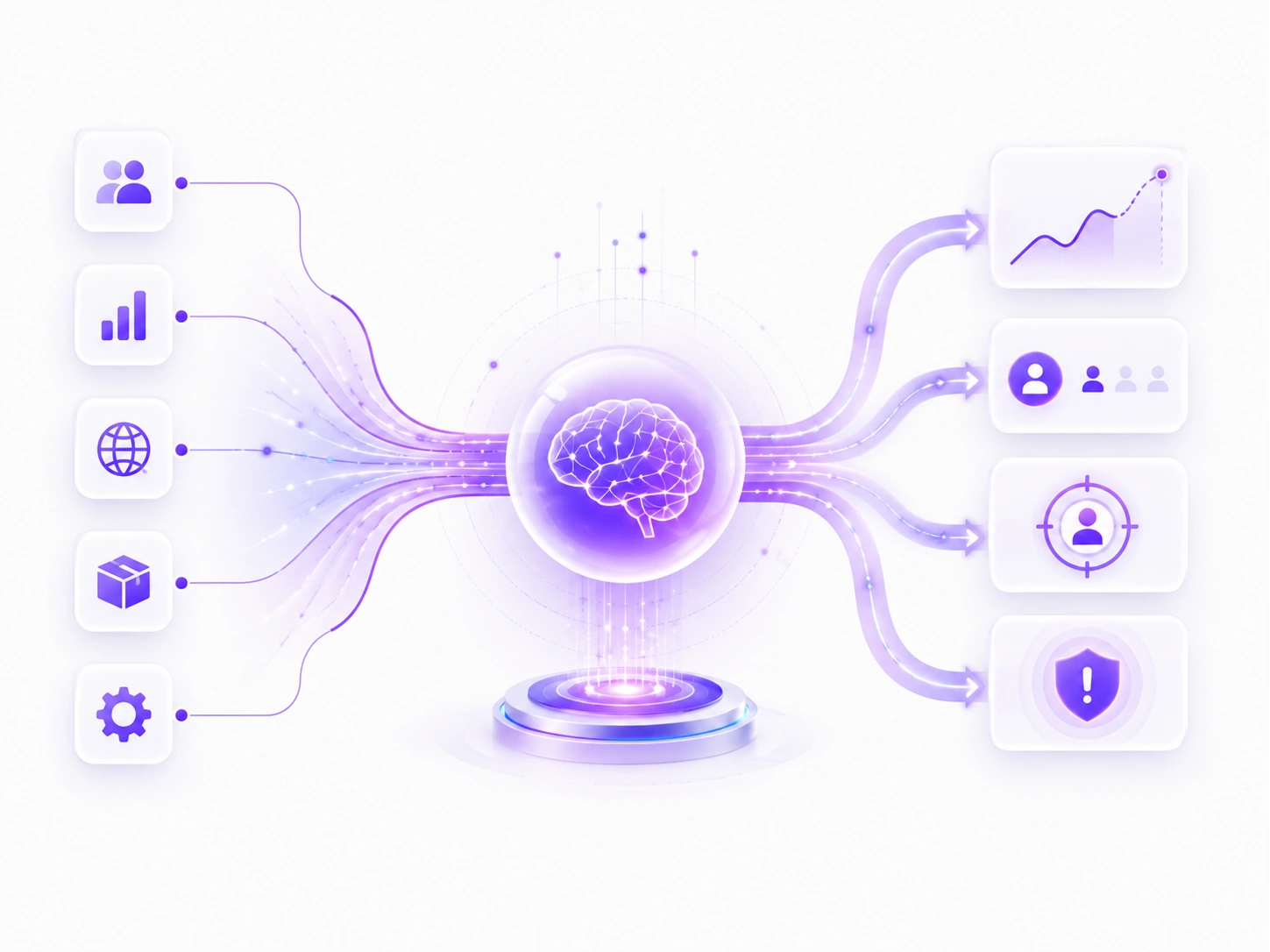
- Forecasts churn, demand, conversions and operational risk
- Provides early warnings before problems impact performance
- Validated on unseen data before deployment
- Supports decisions with measurable confidence, not guesswork
Recommendation Engines
A recommendation engine suggests the right product, content or action to each user based on their behaviour and that of similar users. It is the technology behind every good ecommerce upsell and content feed, the quiet system that shows each person what they are most likely to want next, rather than showing everyone the same thing. For the right business, it directly lifts revenue and engagement.
We build recommendation engines tuned to your catalogue and your customers, learning from real behaviour, what people view, buy, and engage with, to make suggestions that actually convert. A good recommendation engine does not just pad the page with related items; it surfaces the suggestion that genuinely fits, which both lifts sales and improves the customer experience because the recommendations feel helpful rather than random. We measure its impact against real outcomes, so you know whether it is earning its place rather than just looking sophisticated.

- Personalised suggestions for each user, not one-size-fits-all
- Learns from real behaviour: views, purchases, engagement
- Lifts revenue and engagement with suggestions that fit
- Impact measured against real outcomes
Forecasting Models
Forecasting models predict demand, revenue and trends over time, so you can plan with evidence instead of guesswork. Better forecasts mean better stock levels, better staffing, better cash-flow planning and fewer expensive surprises, the over-ordering that ties up cash, the under-staffing that loses sales, the cash crunch nobody saw coming.
We build forecasting tuned to your business's actual patterns, including the seasonality, trends and quirks that generic forecasting tools miss. A model that knows your real history, your busy seasons, your slow months, the way a promotion ripples through demand, forecasts far more usefully than a one-size-fits-all tool. And as with all our models, we show you its accuracy on past periods it was not trained on, so you know how much to trust it before you plan around it. Forecasting is most valuable precisely when it is trustworthy, and trust comes from proven accuracy.
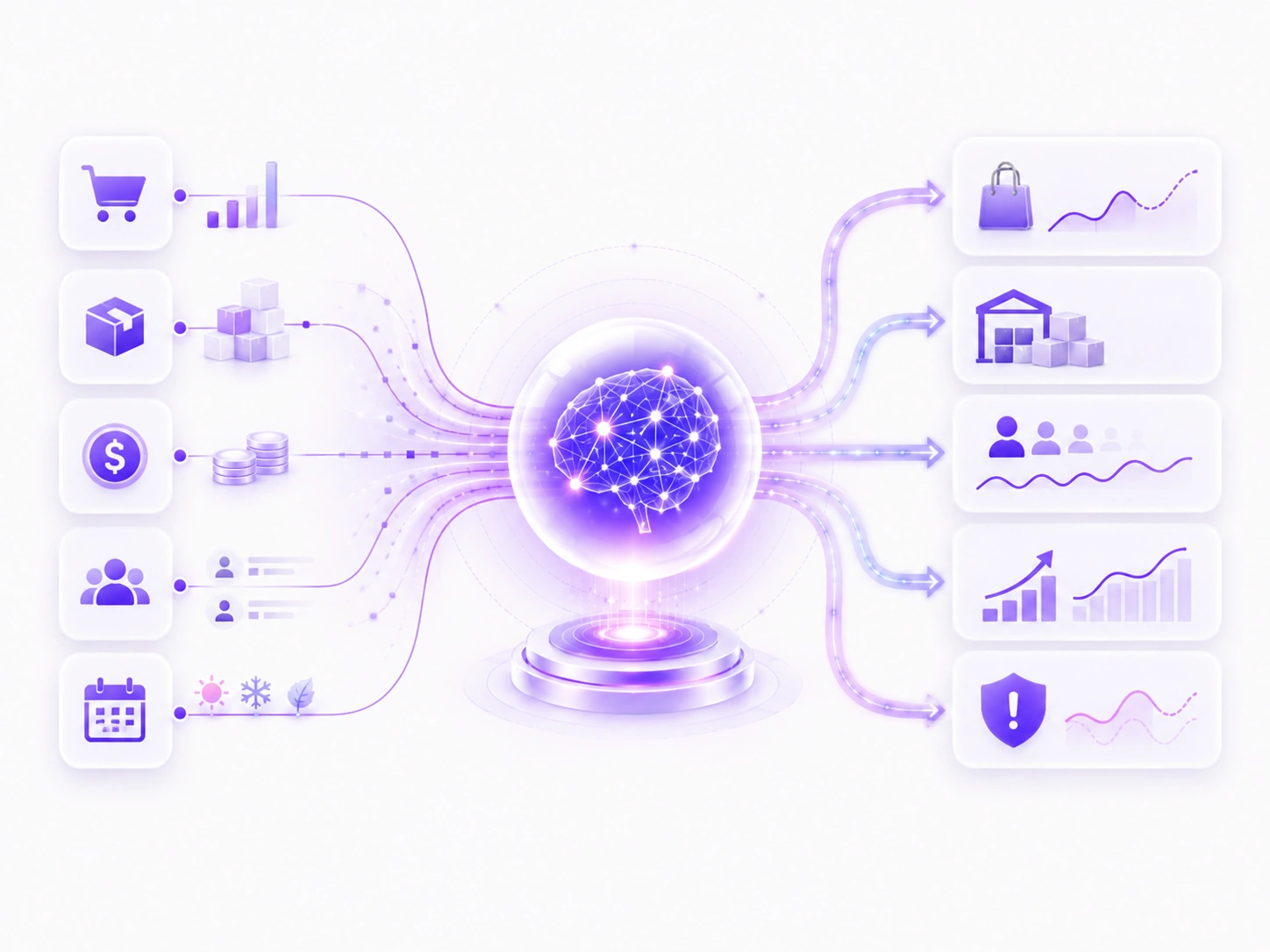
- Predicts demand, revenue and trends over time
- Tuned to your real seasonality, trends and quirks
- Better stock, staffing and cash-flow planning
- Accuracy shown on past periods before you plan around it
Classification Systems
Classification systems automatically sort and label data at scale, categorising support tickets, flagging suspicious transactions, tagging content, sorting documents into the right buckets. They are a common building block in fintech software development and anywhere your team currently sorts things by hand at volume, a classification system can do it faster, consistently, and around the clock, freeing people for work that needs judgement.
We build classification models trained on your real examples, so they learn your actual categories and your actual edge cases rather than generic ones. The model handles the high-volume routine sorting reliably, and we set it up to flag the cases it is genuinely unsure about for a human rather than guessing, so accuracy stays high where it matters. For any business doing a lot of manual categorisation, this removes a tedious, error-prone task and does it more consistently than tired humans can, while keeping a person in the loop for the genuinely ambiguous cases.
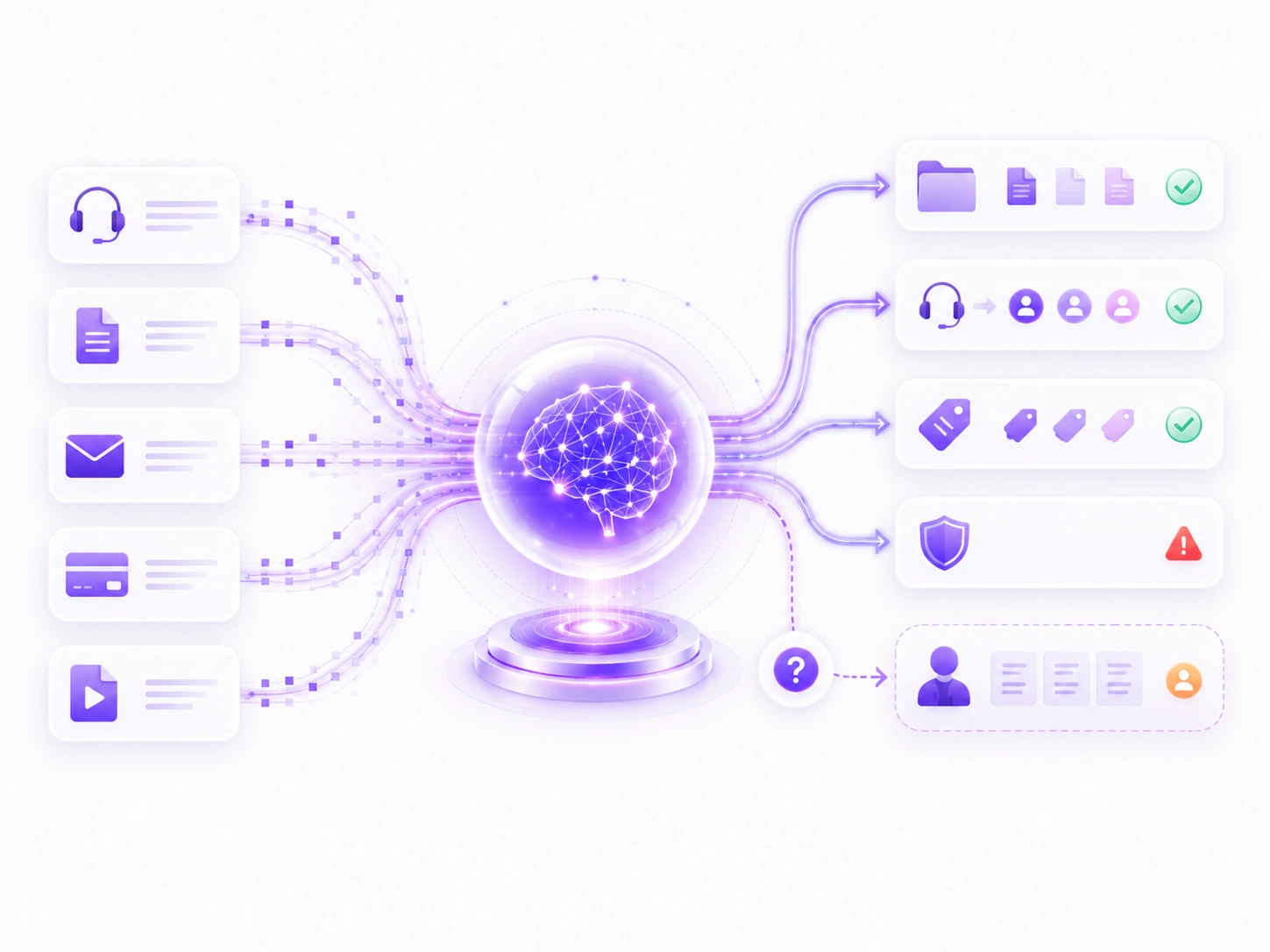
- Sorts and labels data at scale, automatically and consistently
- Trained on your real categories and edge cases
- Flags uncertain cases for a human rather than guessing
- Removes tedious manual sorting, around the clock
The Technology Behind Our Machine Learning
We build machine learning with proven, industry-standard tools, chosen to fit the problem rather than forced through one favourite. We are transparent about the stack so nothing is a black box.
We build models with established frameworks, TensorFlow and PyTorch for deep learning, scikit-learn for classic machine learning, choosing the right tool for each problem.
The work runs on Python, the standard for data science and machine learning, with the surrounding tooling for data handling and experimentation.
Models are deployed on cloud infrastructure built to handle the data and compute involved, with monitoring so accuracy can be tracked over time.
 TensorFlow
 PyTorch
 scikit-learn
 XGBoost
How We Build a Model You Can Trust
A model that looks accurate can be quietly misleading. Here is the discipline we bring to keep this work honest and useful.
Start with the decision
We begin with the decision you want to make better, save which customer, forecast which number, sort which data, then build the model that serves it. A model without a clear decision behind it is a solution looking for a problem, and we avoid that trap.
Check the data is enough
Before building, we assess whether you have enough relevant, clean data to support a reliable model, and tell you honestly if you do not. Promising a model that the data cannot support helps nobody, so this honest check comes first.
Prove accuracy on unseen data
Every model is tested on data it has never seen, and its real accuracy shown to you. This is the only honest measure, because a model can score perfectly on its training data and fail on new cases. You decide whether the accuracy is good enough for your decision.
Monitor and retrain
Models drift as the world changes, so we build in monitoring and retrain on fresh data over time. A model that was accurate at launch and never checked again slowly becomes a liability, and we make sure yours stays trustworthy instead.
What Machine Learning Delivers
When applied to the right data and business problem, machine learning creates measurable advantages that improve decisions, reduce risk and uncover opportunities at scale.

Key Benefits
05- Early warnings and predictions before issues become costly
- More accurate planning based on real business patterns
- Personalized recommendations that improve revenue and engagement
- Automated classification and analysis that reduces manual effort
- Hidden trends uncovered from large volumes of data
- Decisions supported by measurable insights, not assumptions
Machine Learning Across Different Businesses
Seeing concrete examples makes it clearer where machine learning would fit your own situation. A few common patterns:
Ecommerce and retail
Demand forecasting that gets stock levels right, recommendation engines that lift average order value, and churn prediction that flags customers worth winning back before they drift away.
Finance and fintech
Classification systems that flag suspicious transactions for review, risk-scoring models that assess applications consistently, and predictive models that anticipate defaults or fraud patterns.
SaaS and subscriptions
Churn prediction that identifies at-risk accounts in time to act, and usage models that flag which customers are healthy and which need attention from your success team.
Operations and logistics
Demand and capacity forecasting for better planning, and predictive maintenance models that flag equipment likely to fail before it does, avoiding costly unplanned downtime.
These are illustrations, not limits. If your business has a meaningful history of data and makes repeated decisions that better predictions would improve, machine learning is worth examining. We identify the highest-value starting point with you during discovery.
Frequently Asked Questions
Explore the most common questions about machine learning, including how it works, what data it requires, how accuracy is measured and where it delivers the strongest business results.
It depends on the problem. Predicting a rare event needs more examples than predicting a common one, and some tasks work with surprisingly little while others need a lot. During discovery we assess whether your data is enough for what you want to predict, and we tell you honestly if it is not, rather than building a model the data cannot actually support.
We test every model on data it has never seen, called held-out data, and show you its real accuracy on those cases before you rely on it. A model can score perfectly on the data it learned from and still fail on new cases, so this is the only honest measure. You see exactly how often it is right and decide whether that is good enough for your decision.
Traditional analytics tells you what happened, machine learning predicts what will happen or classifies new cases automatically. Your existing reports look backward; a machine learning model looks forward, or sorts at a scale and consistency humans cannot match. They complement each other, and many businesses use machine learning to add prediction on top of the reporting they already have.
Yes, and most real data is messy and scattered. Cleaning and reconciling it is a normal, important part of the work, because a model trained on dirty data produces unreliable predictions. We are upfront that this unglamorous step matters and build it into the project rather than pretending the data is cleaner than it is.
A focused model on reasonably clean data can be built and validated in a few weeks. Projects involving significant data cleaning, multiple models, or production deployment with monitoring take longer. We usually start with one well-defined prediction, prove it works on your data, and expand from there, so you see whether it delivers before committing further.
Yes. We build to GDPR and AVG, keep data in EU regions where required, and are careful about how personal data is used in training and prediction. Machine learning uses your real business data by nature, so protecting it is built into how we run the project. Our European base in Amstelveen means EU data protection is familiar territory.
Models drift as the world and your data change, so we build in monitoring and retrain on fresh data as part of ongoing support. A model that was accurate at launch and never maintained slowly degrades into a liability. We keep yours accurate over time rather than handing over something that quietly stops working.
We tell you during discovery, before you spend on a build. Sometimes a problem is better solved by simpler analytics, a rule-based system, or a small process change, and sometimes the data needed to predict reliably simply is not there. We would rather give you that honest answer than build a model that looks clever and does not actually help.