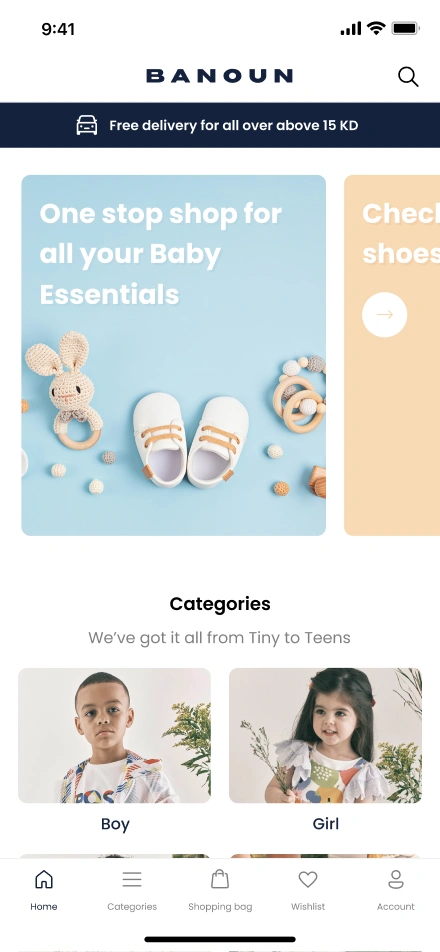
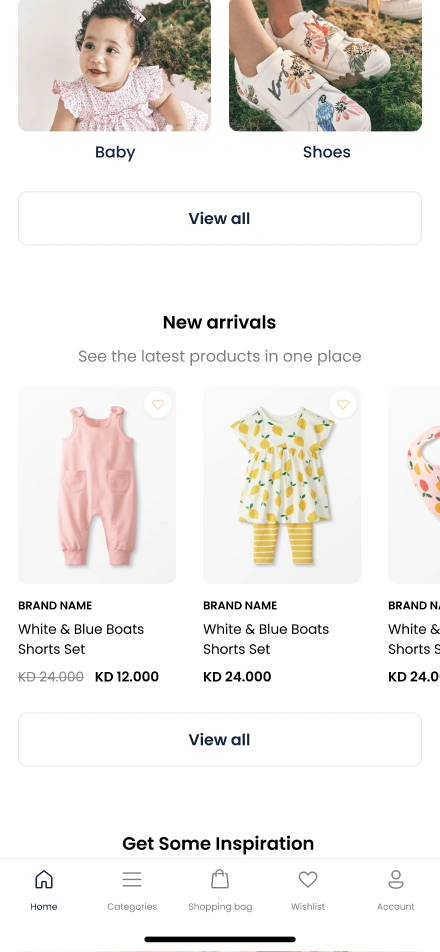
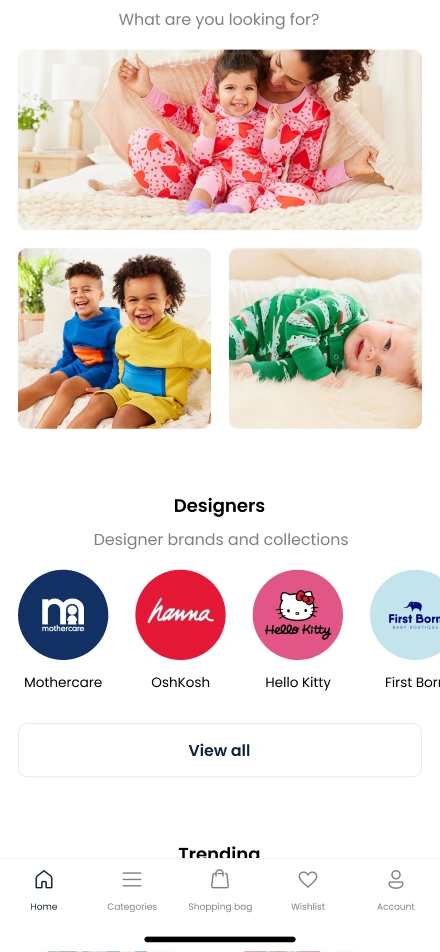
Banoun

Runs on iOS and Android. Helps parents find kids fashion fast.

Parents open Banoun and find what their kids need in seconds. The store team opens the admin panel and pushes a new collection live on a Friday afternoon. The iOS app runs on Swift. The Android app runs on Kotlin. Laravel keeps stock counts in sync on the customer apps, the admin panel and the storefront. Nothing waits on engineers. Nothing slows down on the phone.

Banoun app splash screen
Brand identity

The app opens with confidence

Banoun leans on a navy that feels calm and a peach that feels warm. The palette tells parents they landed somewhere considered and tells kids they landed somewhere friendly. Every screen from splash to checkout follows the same rules.

2Native platforms
9:19.5Design grid
100%Custom UI
Banoun Onboarding screen
Onboarding
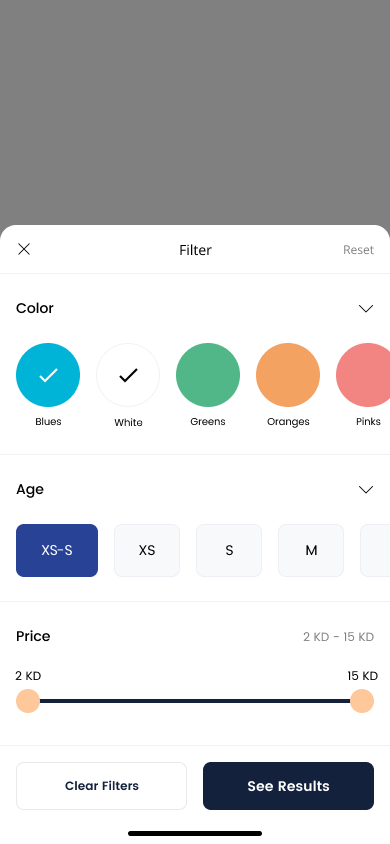
Banoun Product Listing screen
Product Listing
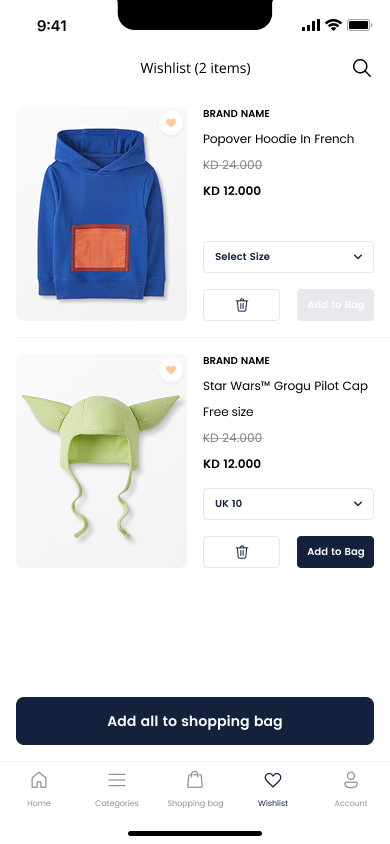
Banoun Wishlist screen
Wishlist
Built With

The stack that ships Banoun in production

Swift runs the iOS app. Kotlin runs the Android app. A Laravel backend on AWS holds the MySQL database and handles every sync. The phones handle polish. The server handles speed.

Languages
SwiftKotlin
Backend
LaravelMySQL
Cloud & Hosting
AWS
Challenges.

Two kinds of users share one app. Kids pick by picture and get bored fast. Parents want to check the brand, price and size before they buy. The app has to work for both. Big pictures sit at the top for the kids. Full product details are one tap away for the parents.

Stock updates right away during a weekend drop. A popular item can sell out in under an hour. So stock counts stay live on the customer apps, the admin panel and the storefront. The apps stay fast even while they check for updates.

We kept kids data private from day one. A parent has to approve every new account. The app only saves the data that personalization really needs. Old data gets deleted quickly. The rules are the floor we start at, not the finish line.

iOS and Android have to feel the same everywhere it counts. Notifications show up the way iPhone and Android users expect. Payments work through Apple Pay and Google Pay the right way. Swipes and taps feel right on each phone. We ran the Android app development in parallel with iOS so Android never felt like an afterthought.

Solutions.

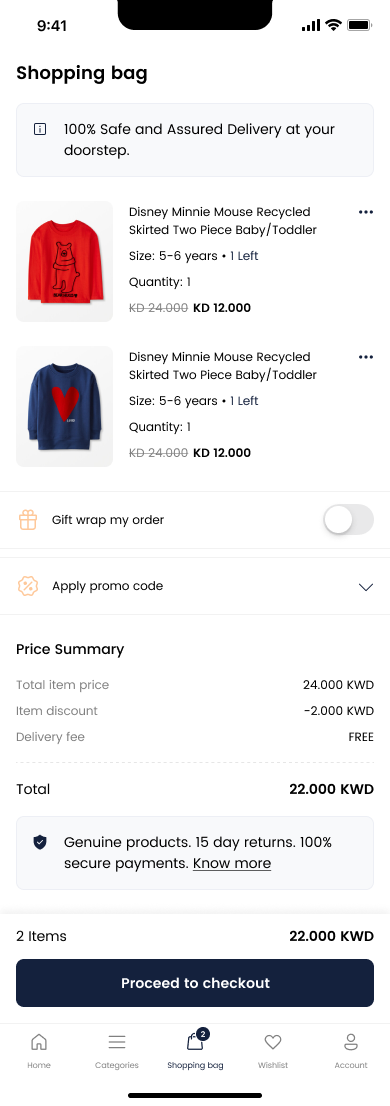
We watched real families shop before we designed a single screen. We followed parents and kids during actual shopping trips. What we saw changed the way the app moves people from browsing to the cart. It also changed how the categories sit on the home screen.

We wrote the iOS app in Swift. We wrote the Android app in Kotlin. We did not use a shared codebase. Swipes, animations, small buzzes and checkout all feel the way each phone expects. People stay with retail apps that feel polished, so we paid for the polish.

The feed learns in the first two weeks. It reads what parents pick (budget, brand, size) and what kids do (look longer, tap twice, skip). Careful backend development lets the store team read the same data to plan the next drop.

We launched with no surprises. Two rounds of beta testing with 40 families found what in-house testing always misses. Tap targets were too small for younger kids. The return flow confused people. One notification went off at bedtime. We fixed all of it before launch day.

One home screen, three features

Promotions, categories and trending in one scroll

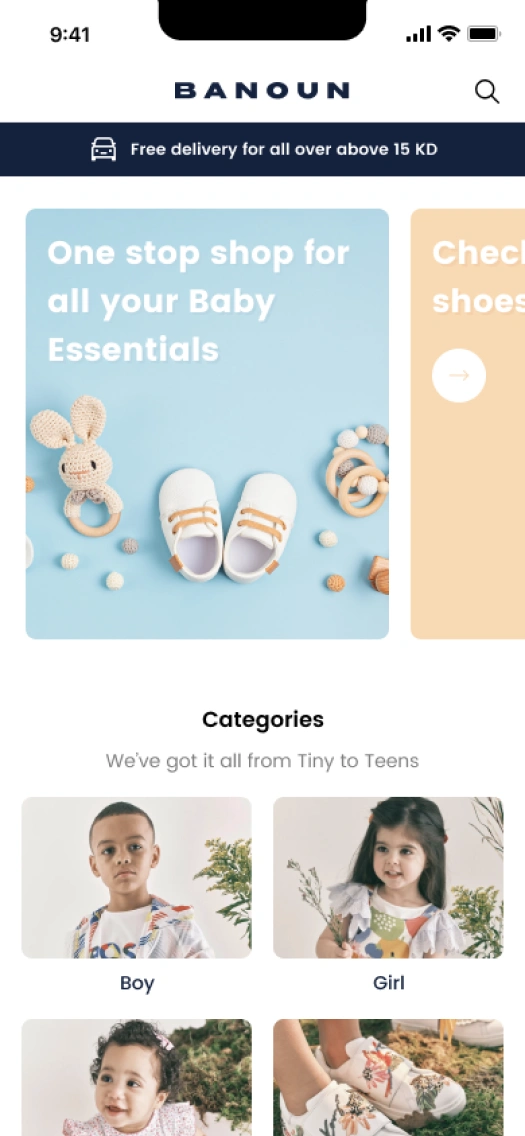
The home screen scrolls parents from the weekend promo into the right category and then onto what is trending. No detour.

Banoun promotional bannerPromotions
Banoun category tilesCategories
Banoun trending productsTrending
FAQ

Frequently Asked Questions

Practical questions retail brands ask before investing in a mobile app. Costs, timelines, tech choices, results and compliance, answered in plain English.

Building a retail shopping app typically costs between $35,000 and $180,000 in 2026. A lean iOS-only MVP starts around $35,000. A production-grade native iOS and Android retail app with real-time inventory, an admin panel and personalization usually lands between $100,000 and $180,000. Final pricing depends on feature depth, integrations and design scope.

The best tech stack for a native iOS and Android shopping app pairs Swift on iOS and Kotlin on Android with a Laravel or Node.js backend, a MySQL or PostgreSQL database and AWS for hosting and media. Native gives retail apps the polish their users expect, while the backend keeps inventory and orders in sync.

A retail mobile app typically takes 4 to 6 months from kickoff to public launch. Expect 2 weeks of discovery and UX research, 10 to 14 weeks of parallel Swift and Kotlin development, 2 weeks of closed beta testing and 1 to 2 weeks for App Store and Google Play review. Integrations and scope adjust the timeline.

A retail app integrates with existing ERP or POS systems through REST APIs, webhooks or middleware connectors that sync products, stock levels and orders in both directions. Common integration targets include Shopify, Magento, SAP, Oracle NetSuite and Microsoft Dynamics. Well-planned integrations reduce manual work and keep the mobile app aligned with the single source of truth.

Yes, a retail shopping app can support Arabic and English from launch when localization is planned early. Right-to-left (RTL) layout, bilingual product content, localized pricing, currency formatting and a clear language switcher should be built into the UX from day one. Retrofitting RTL into a finished app is far more expensive than designing for it up front.

A retail shopping app should track conversion rate, average order value, daily and monthly active users, retention at 7/30/90 days, cart abandonment, session length and install source. Product-level metrics include add-to-cart rate, wishlist saves and stockout impressions. Clear dashboards let merchandising and growth teams make decisions without waiting on engineering.

After launch, a retail app needs ongoing maintenance: iOS and Android OS updates, SDK upgrades, security patches, performance monitoring and regular feature releases. Plan for roughly 15 to 25 percent of the original build cost annually as a healthy maintenance budget. A dedicated post-launch team keeps crash rates low and App Store ratings up.

A custom retail mobile app typically delivers higher average order value, stronger repeat-purchase rates and lower customer acquisition cost than web-only over time. Payback varies by category, but well-built retail apps often recover build cost within 12 to 24 months through improved retention, personalized feeds and direct push-notification marketing.

Start your project

Have a similar app in mind?

We ship apps that run natively on iOS and Android, backed by Laravel servers on AWS. We partner with retail, boutique and lifestyle brands that want apps that actually perform. Tell us about your project.