GoLocal
Find businesses, explore events and unlock local deals — all powered by GPS and tailored to your neighborhood.
We built GoLocal to bridge the gap between consumers and local businesses. GPS surfaces what is nearby. Advanced search narrows it down. Deals and events keep the community coming back. One platform for users, business owners and municipalities.
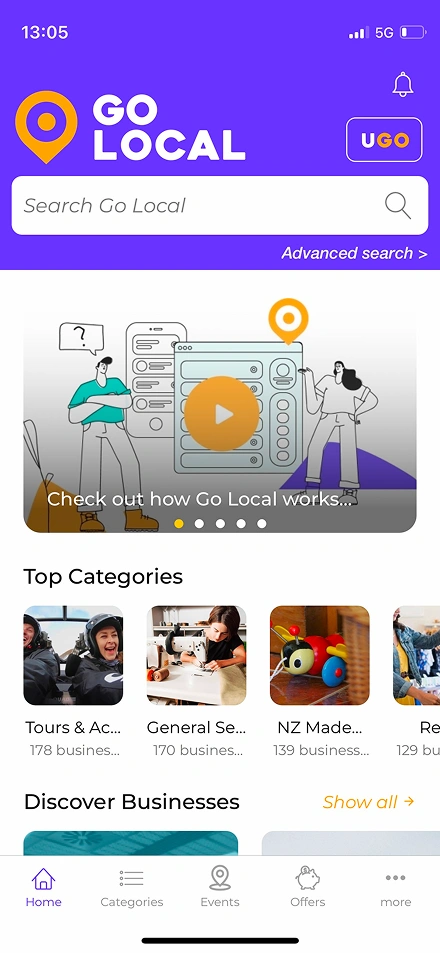
One business. Three screens.
Native iOS and Android apps paired with a WordPress website. Same data, same deals, same experience across every device.
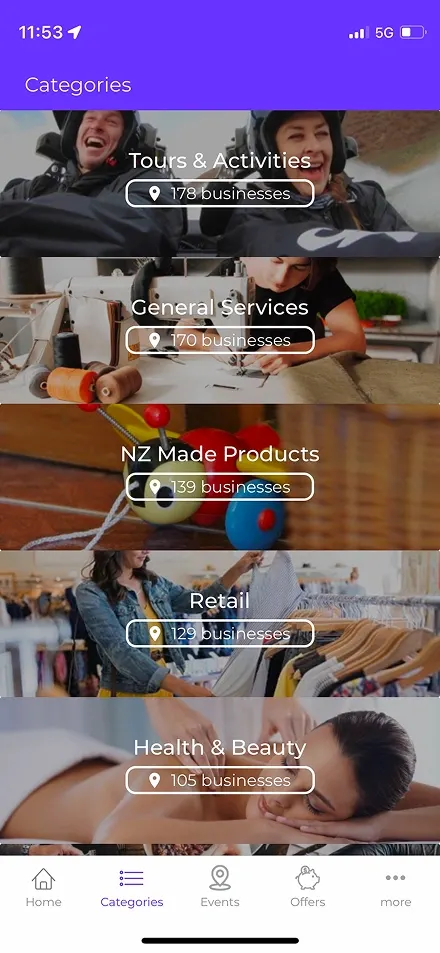
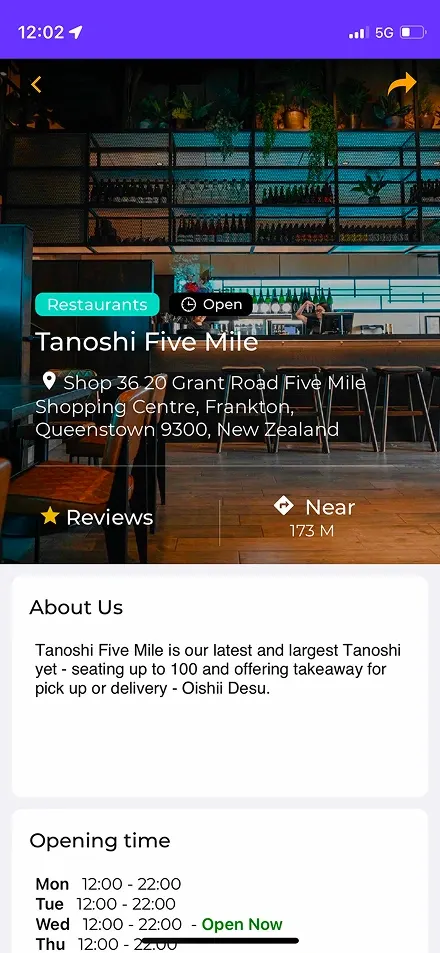
Everything a local explorer needs.

GPS-driven discovery
Accurate, fast searches for businesses and services near the user's location. Results update as they move.

Comprehensive directory
A wide range of categories from daily essentials to luxury experiences. Every business in one place.

Local deals & events
Exclusive promotions, discounts and community happenings. Users find what is on right now.

Personalized recommendations
Tailored suggestions based on user interests, browsing history and location patterns.

Advanced search
Filter by keyword, category, radius and open status. Find anything from handymen to gourmet restaurants.

Web + mobile
Native iOS and Android apps paired with a WordPress website. Same data, three platforms, one API.
Find anything nearby in seconds.
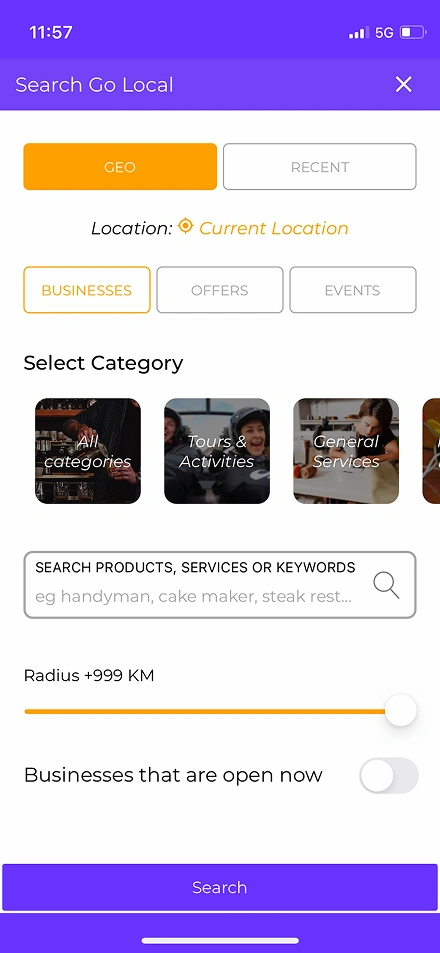
Filter by keyword, category, radius and open status. From handymen to gourmet restaurants, results update as users move.
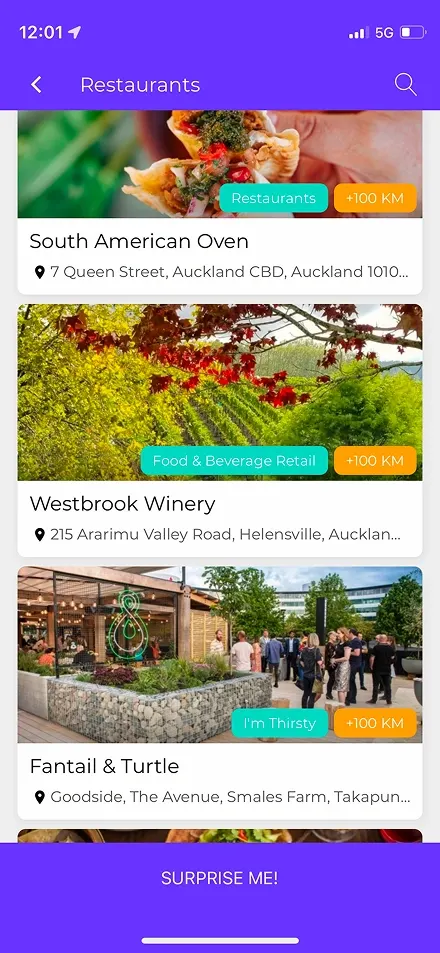
Search. Discover. Connect.

GPS finds your area
The app detects your location and surfaces businesses, services and events within your chosen radius.

Search and filter
Browse by category, search by keyword or filter by distance. Advanced search covers businesses, offers and events.

Connect locally
View business details, grab a deal, RSVP to an event or contact the owner directly. Everything happens in-app.
Native apps. WordPress website. One API.
Swift on iOS and Kotlin on Android deliver the native GPS search and browsing experience. A WordPress website extends reach to desktop. CodeIgniter powers the RESTful API that serves all three platforms from one MySQL database.
Mobile
Web & Backend
Three platforms, zero friction.
The WordPress frontend and CodeIgniter backend had to work together seamlessly. Two different PHP frameworks serving the same data needed a clean API boundary so changes to the website did not break the mobile apps and vice versa.
We built a RESTful API in CodeIgniter that serves as the single source of truth for both the WordPress website and the native apps. The API handles search, listings, deals and events. WordPress consumes it on the server side. The mobile apps consume it directly. Changes to one frontend never affect the other.
GPS-based searches had to return accurate, relevant results within seconds. A user standing on a busy street expects to see the nearest businesses ranked by distance, filtered by category and updated as they move — all without noticeable lag.
We implemented spatial indexing in MySQL with geographic bounding box queries and Haversine distance calculations. Results return in under 200 milliseconds for any location. The app re-queries as the user moves, updating results in the background without interrupting the browsing experience.
The app had to serve users across different regions, each with a different density of listed businesses. A search in a dense city returns hundreds of results. A search in a rural area might return ten. The interface had to feel useful and populated in both cases.
We designed adaptive layouts that respond to result density. In dense areas, results display as a scrolling grid with compact cards. In sparse areas, a map view with pins gives context. The app detects density automatically and switches layout to keep the experience feeling full regardless of location.
Questions before going local.
A GPS-based business finder usually lands somewhere between EUR 20,000 and EUR 60,000 in 2026, depending on how much you build at launch. A focused first version with location search, listings and a simple admin sits at the lower end, while adding deals, events, personalised recommendations and a companion website pushes it higher. We normally start with a tightly scoped first release and give you a fixed proposal in euros before any code is written, so the number is clear up front rather than a moving target.
The app reads the device's location, then asks the backend for everything within a chosen radius and ranks it by real distance. We do that efficiently with spatial indexing in the database, bounding-box queries to narrow the search area, and Haversine calculations for accurate distances. The result is sub-second responses that re-run quietly as the user moves, so the list always reflects where they actually are.
Yes, and that's exactly how GoLocal is built. The trick is to put a single API between your data and your frontends. We built a RESTful API in CodeIgniter that both the native apps and the WordPress website draw from, so a listing or deal entered once appears everywhere at the same time. You avoid duplicate data, conflicting information and the maintenance headache of keeping two systems in sync by hand.
We design the interface to adapt to the number of results rather than assuming every search is the same. In dense areas the app shows a compact, scrollable grid; in sparse areas it switches to a map with pins that gives a sense of place even when there are only a handful of listings. The app detects density automatically, so a search feels complete whether the user is in a city centre or a small village.
At a minimum: GPS-based search, a categorised business directory, and clean listing pages with the details people actually need, such as hours, location and contact. From there, deals and events are what bring users back, and advanced filters (keyword, category, radius, open-now) make the whole thing genuinely usable. We'd rather launch a tight, reliable version of those essentials than a bloated app that does everything slowly.
For a project covering native iOS and Android apps plus a website on a shared API, plan for roughly three to six months, depending on scope. A leaner first release can ship sooner, while richer features like personalised recommendations and a full deals-and-events system extend the timeline. We work in short iterations and show you something working at the end of each, so you're never months in before seeing real progress.
It depends on who's managing the content. For GoLocal, WordPress made sense because it gives non-technical staff a familiar way to publish and manage content, and it consumes the same API as the apps so the data stays unified. A custom CMS is worth it when your editorial workflow is unusual or you need very specific control, but for most local-directory sites WordPress on top of a clean API is faster to launch and easier to hand over. We'll recommend honestly based on your team, not on what's trendy.
Owners get their own way to claim and update their listing, including details, hours, photos and any current deals or events, which then flows through the same API to every platform at once. Because there's a single source of truth, an owner updating their opening hours sees that change reflected in both apps and the website immediately, with no separate uploads and no version of their information drifting out of date.
Building a local discovery or directory app?
GPS search, business listings, deals and events — across mobile and web.