Riciclario
Simplify your life. Recycle right, every time.
What goes where. When it is collected. Why it matters.
We built Riciclario to close the gap between waste regulations and everyday life. Through native mobile app development, citizens scan a barcode, check the schedule and put the right bin out on the right day. Municipalities manage rules through an admin panel. Less contamination. Fewer missed pickups. A measurable step toward sustainability.
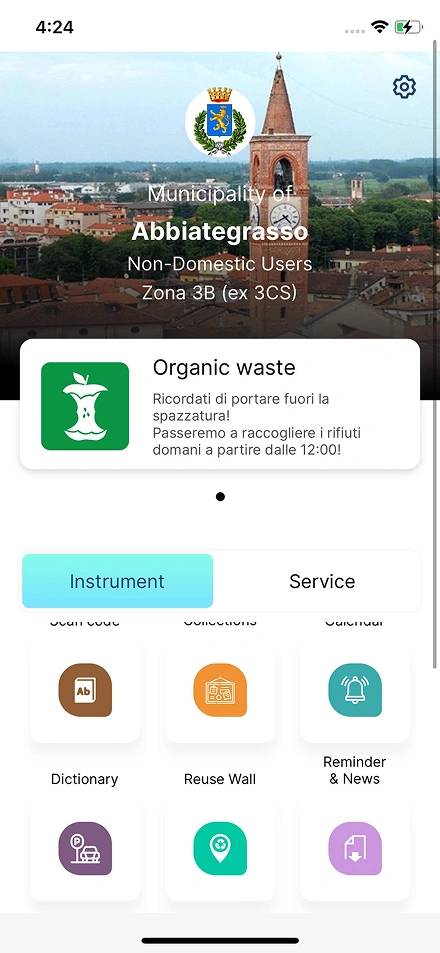
Six Screens That Cover the Whole Recycling Journey
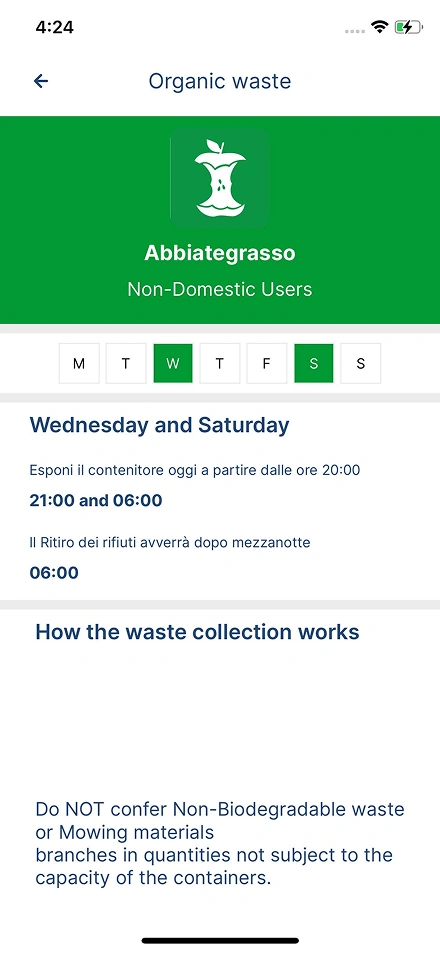
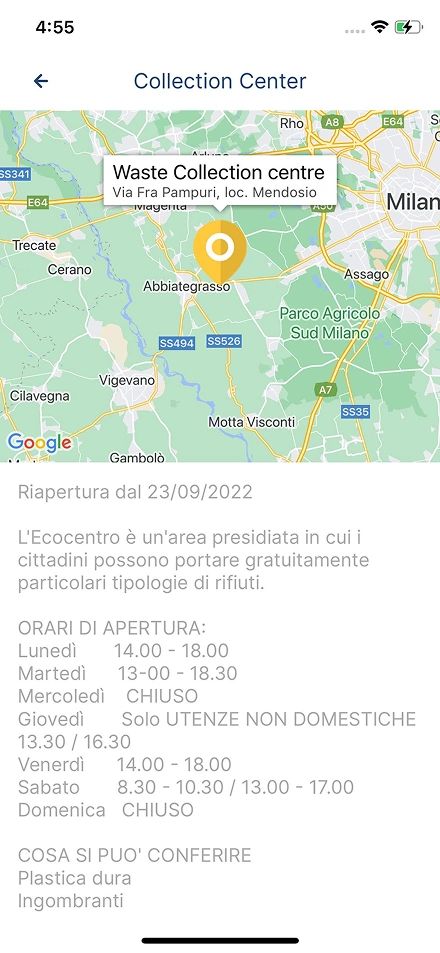
Supports 6 languages for multilingual communities.
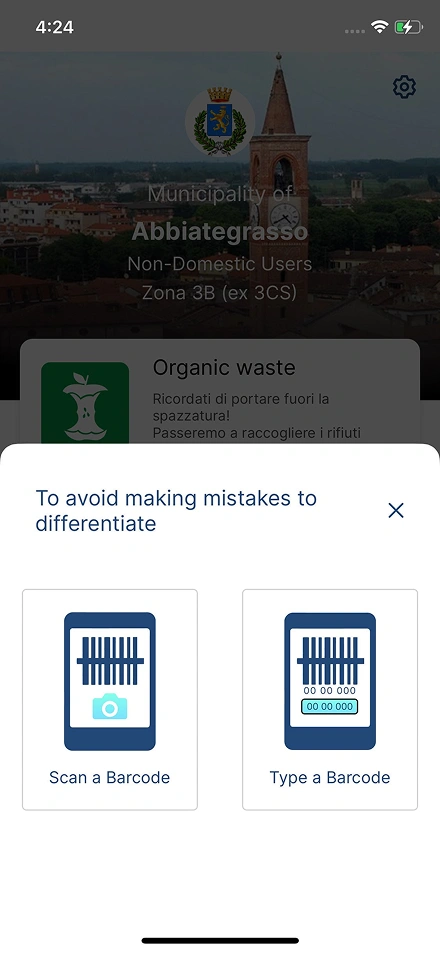
 Barcode scanner
 Waste dictionary
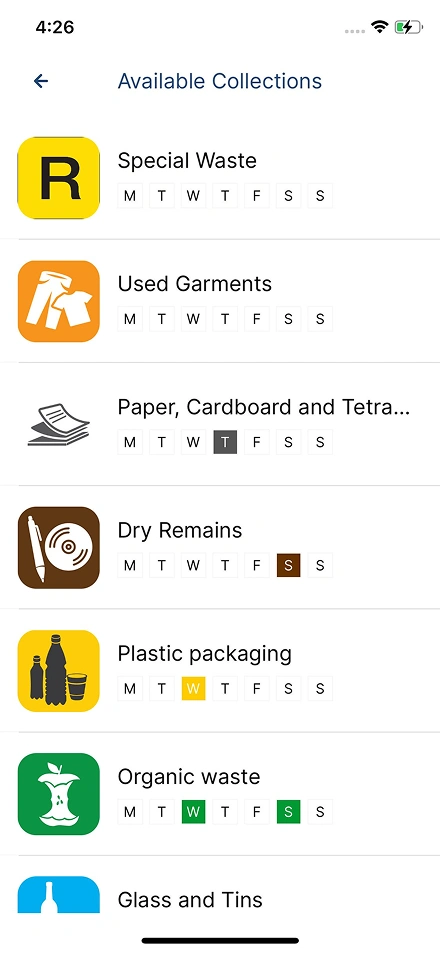
 Collection calendar
 Smart reminders
 Drop-off map
 6 languages
Scan. Sort. Schedule.

Scan or Search
Point the camera at a product barcode or type its name. Riciclario tells you exactly which bin it belongs in and when that waste type is collected in your area.
Check the Schedule
Open your municipality's collection calendar to see what is being picked up today, tomorrow and across the rest of the week.

Get Reminded
A push notification arrives the evening before each collection. No more missed pickups and no more wrong bins left on the curb.
Native Apps, Municipal-Grade Backend
Mobile
Backend
Municipal Complexity, Simplified
Each town sets its own separation rules, collection days and accepted materials. The app had to adapt to every municipality's regulations without a separate build or manual setup for each one.
We built a municipality configuration layer on the backend. Each city's rules, collection days and accepted materials live as structured data. When a citizen selects their town, the app loads the correct guidelines automatically, so adding a new municipality is an admin task rather than a code change.
Waste tariff data is region-specific and updated often. Integrating it in real time while keeping the experience simple needed a backend that could ingest municipal feeds and surface them through a clean, searchable interface.
A data pipeline ingests tariff information from municipal sources, normalises it and stores it in MySQL. The app queries it through a clean API and presents tariffs by user type and zone. Updates reach all users within minutes of a municipality publishing them.
Citizens needed to identify waste types instantly without memorising categories. A barcode scanner and search dictionary had to return accurate sorting guidance in under a second, even for products with ambiguous packaging.
We integrated a barcode-scanning engine that maps product codes to waste categories. For items without a barcode, a searchable dictionary covers thousands of products. Both return results in real time with clear visual cues showing the correct bin colour and collection day.
Questions Before the First Pickup
A municipal recycling app typically costs between EUR 30,000 and EUR 90,000, depending on features like barcode scanning, multi-municipality support and admin panels. A single-town app with basic schedules sits at the lower end; a multi-municipality platform with tariff integration sits higher. We share a fixed scope and price before development starts.
The app reads a product's barcode with the camera and looks it up against a database that maps each product to a waste category. For products without a recognised barcode, a searchable dictionary fills the gap. The app then shows the correct bin and the next collection day for that waste type.
Yes, and that is exactly how Riciclario works. Each municipality's rules live as structured data on the backend. The citizen selects their town once, and the app loads the right guidelines, collection days and accepted materials automatically. New municipalities are added through an admin panel without a new release.
We build a data pipeline that ingests tariff feeds from municipal sources, normalises the formats and stores them in a database. The app reads this through a clean API and presents tariffs by user type and zone, with updates propagating to users shortly after a municipality publishes them.
Reminders work best the evening before collection, when there is still time to act. We tie notifications to each user's municipality and selected waste types, so people only get alerts that are relevant to their street and their schedule rather than a generic broadcast.
A focused recycling app for a single municipality can ship in three to four months. A multi-municipality platform with barcode scanning, tariff integration and an admin panel typically takes four to seven months, depending on how many data sources need integrating.
At minimum: a waste lookup (barcode or search), a collection schedule, and reminders. Most successful apps add a drop-off map for special waste and multi-language support for diverse communities. An admin panel for municipalities to manage their own rules is what makes the app scalable beyond one town.
We build the app with a localisation layer from the start, so all text, waste categories and notifications can be translated without code changes. Riciclario launched with six languages to serve multilingual communities, and adding another language is a content task rather than a development one.
Building a sustainability or municipal app?
We build native apps for waste sorting, collection scheduling and tariff management.
Start a conversation