TrainAERO: An AI Fitness Coach That Actually Adapts
TrainAERO is an AI fitness coaching app that reshapes every workout around the person doing it — their body, their injuries and their progress — instead of handing everyone the same fixed plan. The result is coaching that adjusts session to session, the way a good human trainer would, rather than a static program that ignores how the last week actually went.
Most fitness apps treat everyone identically
The honest weakness of almost every fitness app is that it does not know the person using it. It hands out the same template whether you slept four hours or eight, whether your shoulder is sore, or whether you breezed through the last session and were ready for far more. It cannot see any of that, so it cannot respond to it, and the program drifts further from reality with every workout. TrainAERO was built to close that gap — an app that genuinely pays attention, noticing when someone is progressing and pushing harder, noticing when recovery is slipping and easing off, and working around an injury instead of pretending it does not exist. In other words, coaching that adapts, which is exactly what a generic program cannot do.
What a smart coaching app needs
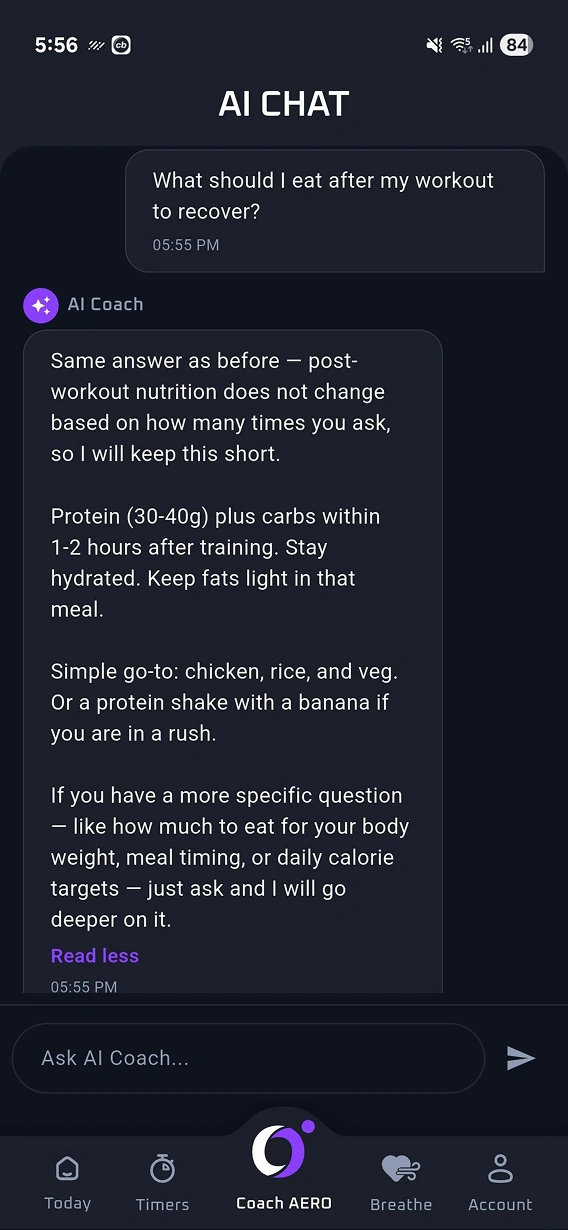
AI Coach Chat
Ask the AI coach anything in plain conversation — how to fix your form on a lift, how to swap an exercise you dislike, or why the program is built the way it is. It answers in context, like a coach would, instead of sending you off to search.
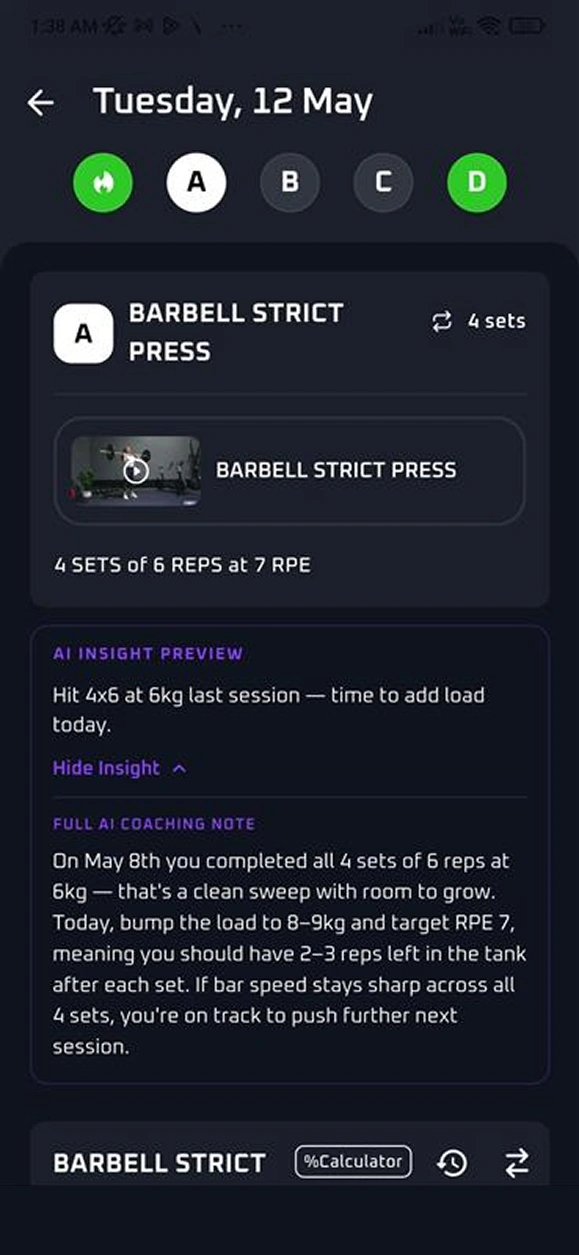
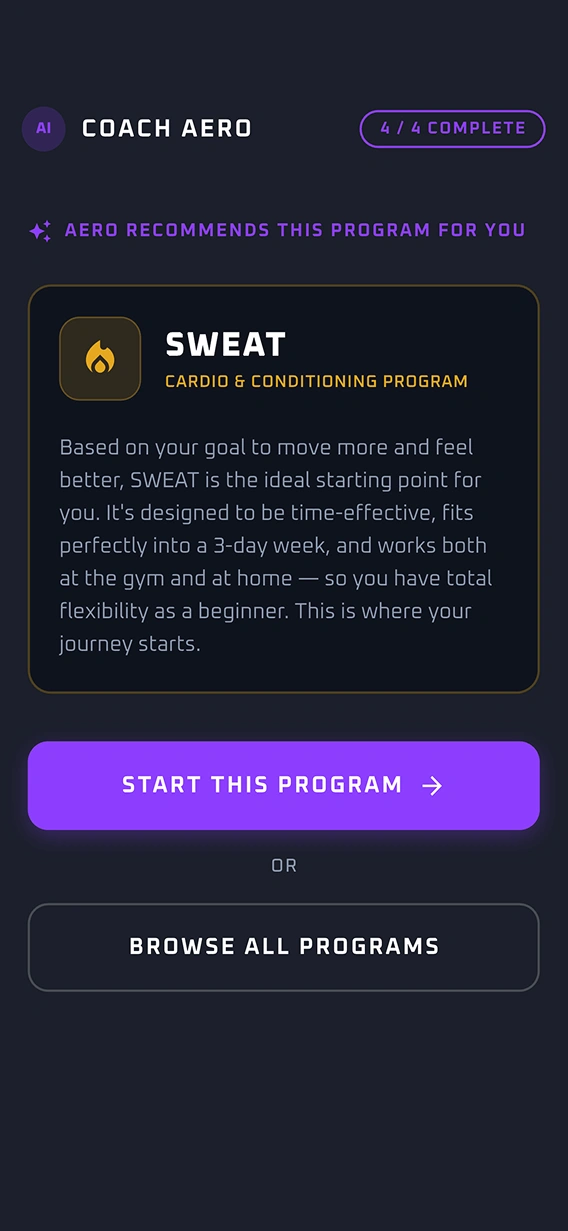
Adaptive Programs
Every session is shaped by the one before it. When the data shows steady progress the AI raises the intensity; when recovery signals dip it scales back, so the program tracks your real state instead of marching on regardless.
Injury-Aware Swaps
Flag an injury and the AI immediately replaces the affected exercises with safe alternatives that work the same muscles through different movement patterns. The session stays effective without aggravating the problem, and the swap takes a single tap.
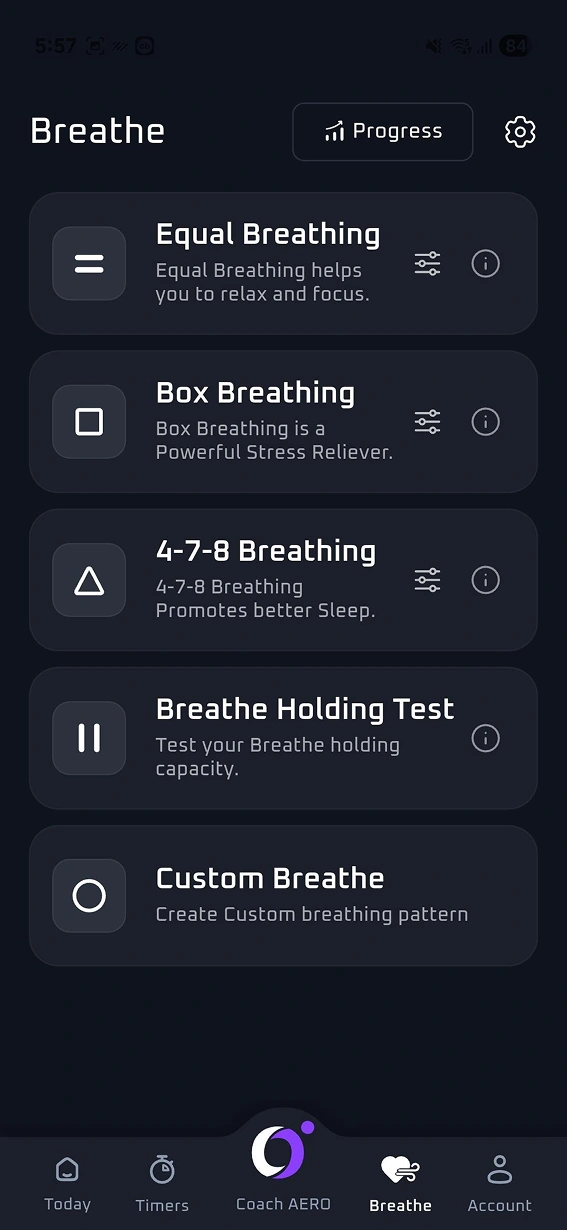
Breathwork Recovery
Guided breathing sessions support cooldowns, stress relief and active recovery, and the AI recommends them based on how hard the workout was. Recovery becomes part of the program rather than an afterthought.
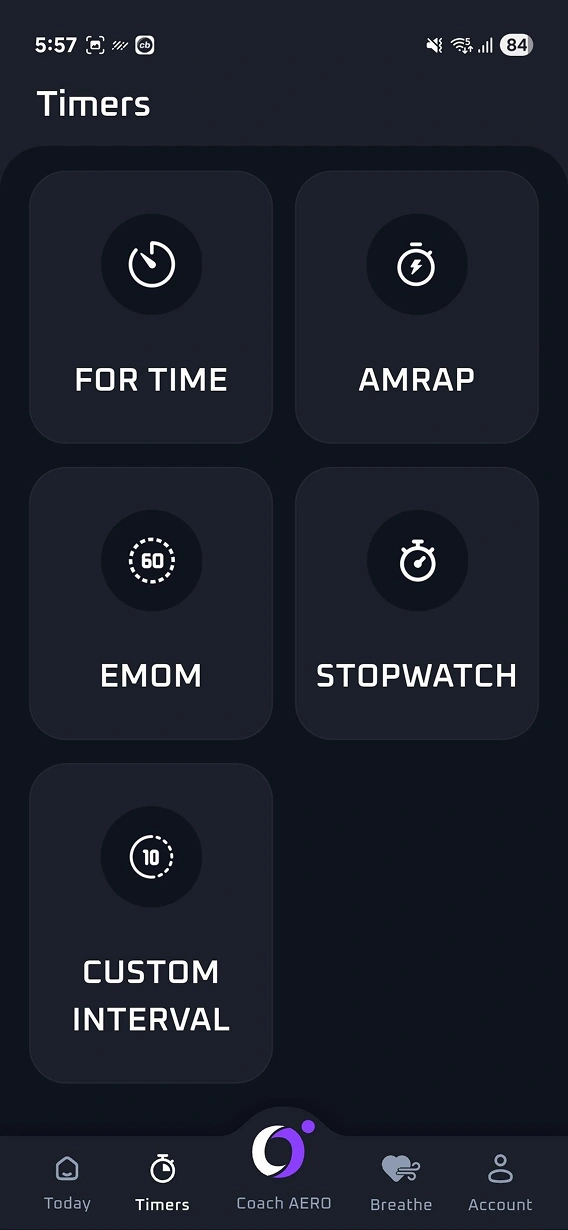
Training Timers
AMRAP, EMOM, For Time, a plain stopwatch and custom intervals — each with sound cues, haptic feedback and background tracking, so the timer keeps working even when the phone is in a pocket.
Workout Summary
After each session the AI runs a short check-in on sleep, energy, soreness and motivation. Those answers feed straight into the next workout, so the app keeps learning about you and adjusting accordingly.
Train. Learn. Adapt.
Complete a workout
The user follows their personalised program and logs sets, reps and weights as they go, with the app capturing the detail automatically so logging stays quick rather than becoming a chore.

The AI analyses the session
Once the workout is done, the AI reviews how it went, asks its recovery questions, and updates the user's training profile with what it learned, building a clearer picture of the individual session by session.
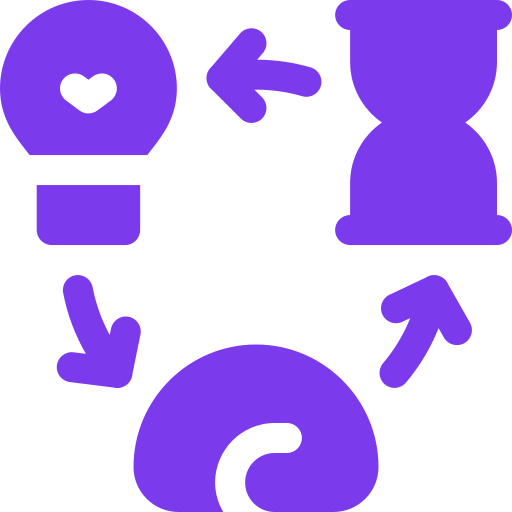
The next session adapts
The following workout reflects all of that — harder if the user is clearly progressing, lighter if they need to recover, and modified if something is hurting. The program is never static, because the loop never stops learning.
Flutter front end, AI coaching back end
TrainAERO was built with Flutter app development so a single codebase delivers a native-feel experience on both iOS and Android, which kept development efficient without compromising how the app feels on each platform. Firebase handles authentication, real-time data and cloud functions, giving the app a reliable, scalable foundation without a heavy custom backend for the basics. The intelligence lives server-side: the AI coaching engine processes each user's workout data and generates the personalised adjustments that drive the adaptive program, keeping the heavy logic off the device and easy to improve over time.
What we solved building TrainAERO
Generic programs ignore the individual
The core problem with off-the-shelf fitness apps is that they treat every user the same. A complete beginner gets the same template as someone returning carefully from a knee injury. The app needed a coaching layer intelligent enough to adjust volume, intensity and exercise choice from real individual data, not assumptions.
Our AI development team built an adaptive AI engine that takes in every completed workout, tracking sets, reps, weights, rest times and perceived effort across sessions. It uses that history to shape the next session. Consistently hitting targets pushes intensity up, while a drop in performance pulls the program back automatically, so the plan always reflects the real person.
Injuries need intelligent exercise replacement
An injury changes a program, but rarely the whole thing. A shoulder issue might rule out overhead pressing while leaving other movements perfectly fine. The AI had to understand the body well enough to suggest safe alternatives without gutting the entire session in the process.
The injury-aware system maps every exercise to its muscle groups and movement patterns. When a user flags an injury, the AI identifies exactly which exercises are affected and proposes replacements that train the same muscles through safe patterns, with a clear explanation of why each swap was made, all in one tap.
Recovery signals go unnoticed
In most apps, recovery is invisible. The program says train, so users push through fatigue, and the warning signs of overtraining never register until something breaks. TrainAERO needed to spot those signals from performance trends and ease off before burnout or injury, not after.
The post-workout check-ins capture sleep, energy, soreness and motivation, which combine into a recovery score. The AI reads that score against performance trends to catch the early signs of overtraining and quietly dials back upcoming sessions, protecting the user from their own enthusiasm.
Training timers are deceptively complex
Timers look trivial until you build them. Athletes use wildly different formats — AMRAP, EMOM, For Time, custom intervals and a simple stopwatch — and each behaves differently. Every type needed its own logic, sound cues and feedback without turning the interface into clutter.
We built each timer as an independent module sharing a common shell. AMRAP counts up and tracks rounds, EMOM fires alerts at each interval boundary, For Time runs a countdown and logs automatically, and custom intervals chain work and rest. A single unified shell handles sound, haptics and background state across all of them, so the experience stays clean.
Common Questions About AI Fitness Apps
What founders and fitness brands ask about building an AI-powered coaching app.
It depends on scope, but as a guide, an AI fitness app like TrainAERO in the Netherlands typically runs from around EUR 20,000 to EUR 45,000 or more, depending on how deep the AI coaching, injury logic and integrations go. A focused first version costs less, and we give a fixed estimate after a short discovery call.
By learning from real data rather than a template. The engine ingests every completed workout — sets, reps, weights, rest and perceived effort — and uses that history to adjust the next session: harder when the user is progressing, lighter when performance drops. Combined with recovery check-ins, it shapes a program around the individual.
Yes, when it is built to. In TrainAERO, exercises are mapped to muscle groups and movement patterns, so when a user flags an injury the AI swaps only the affected exercises for safe alternatives that train the same muscles differently. The session stays effective without aggravating the injury, and the swap is one tap with a clear reason.
Serious training uses several: AMRAP, EMOM, For Time, custom intervals and a plain stopwatch. Each behaves differently and needs its own logic, sound cues and feedback. We build them as independent modules sharing one shell that handles sound, haptics and background state, so the interface stays clean rather than cluttered.
A cross-platform fitness app of this kind typically takes around four to five months from concept to the App Store, depending on the depth of the AI and the feature set. We work in two-week sprints with working software throughout, so progress is visible rather than going quiet until launch.
Flutter lets one codebase deliver a native-feel app on both iOS and Android, which roughly halves the build and maintenance effort compared with two separate native apps, without a noticeable compromise in how the app feels. For most fitness apps that trade-off is well worth it, and it is what we used for TrainAERO.
As part of the program, not a separate add-on. TrainAERO includes guided breathing sessions for cooldowns, stress relief and active recovery, and the AI recommends them based on how intense the workout was, so recovery is built into the coaching loop rather than left entirely to the user to remember.
Enough to understand both performance and recovery. TrainAERO tracks sets, reps, weights, rest times and perceived effort from each workout, plus post-session answers on sleep, energy, soreness and motivation. Together these let the AI judge progress and fatigue and adapt the next session, which is what makes the coaching feel personal.
Build your AI fitness app with us
We build cross-platform fitness apps with adaptive AI coaching, injury-aware programming and real-time performance tracking, from first concept to the App Store. If you are planning something like TrainAERO, tell us about it and a senior engineer will reply within one business day with an honest view of what it would take.